
WIND
Visualising and interpreting wind as it moves through the landscape, combining direct observation with mechanical recording.
Wind is an ongoing project where I explore how air behaves — how it flows, hesitates, collides with landforms, and leaves traces in ways we rarely see. This page is a living archive of that exploration.
The origins
Sketches
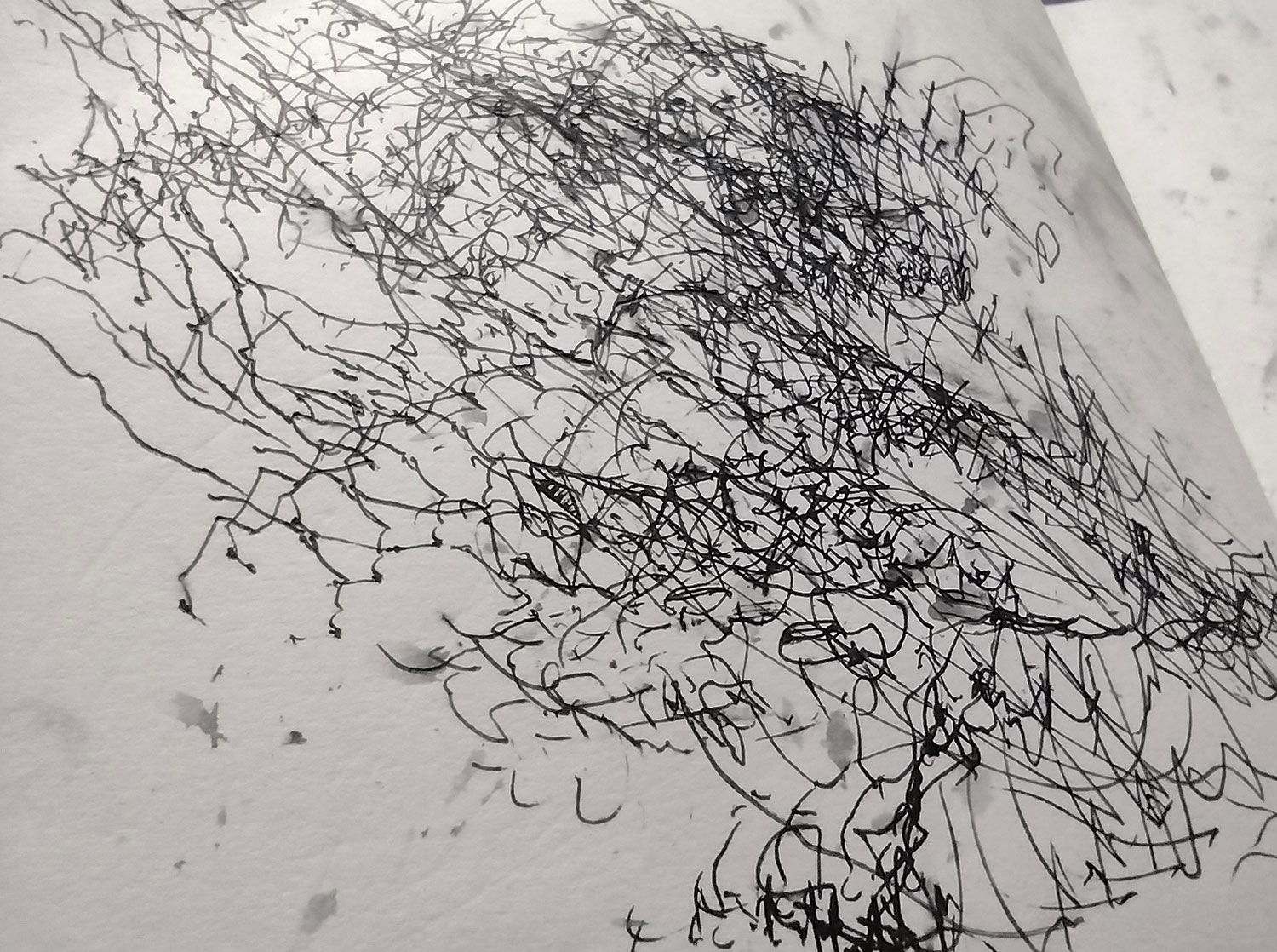
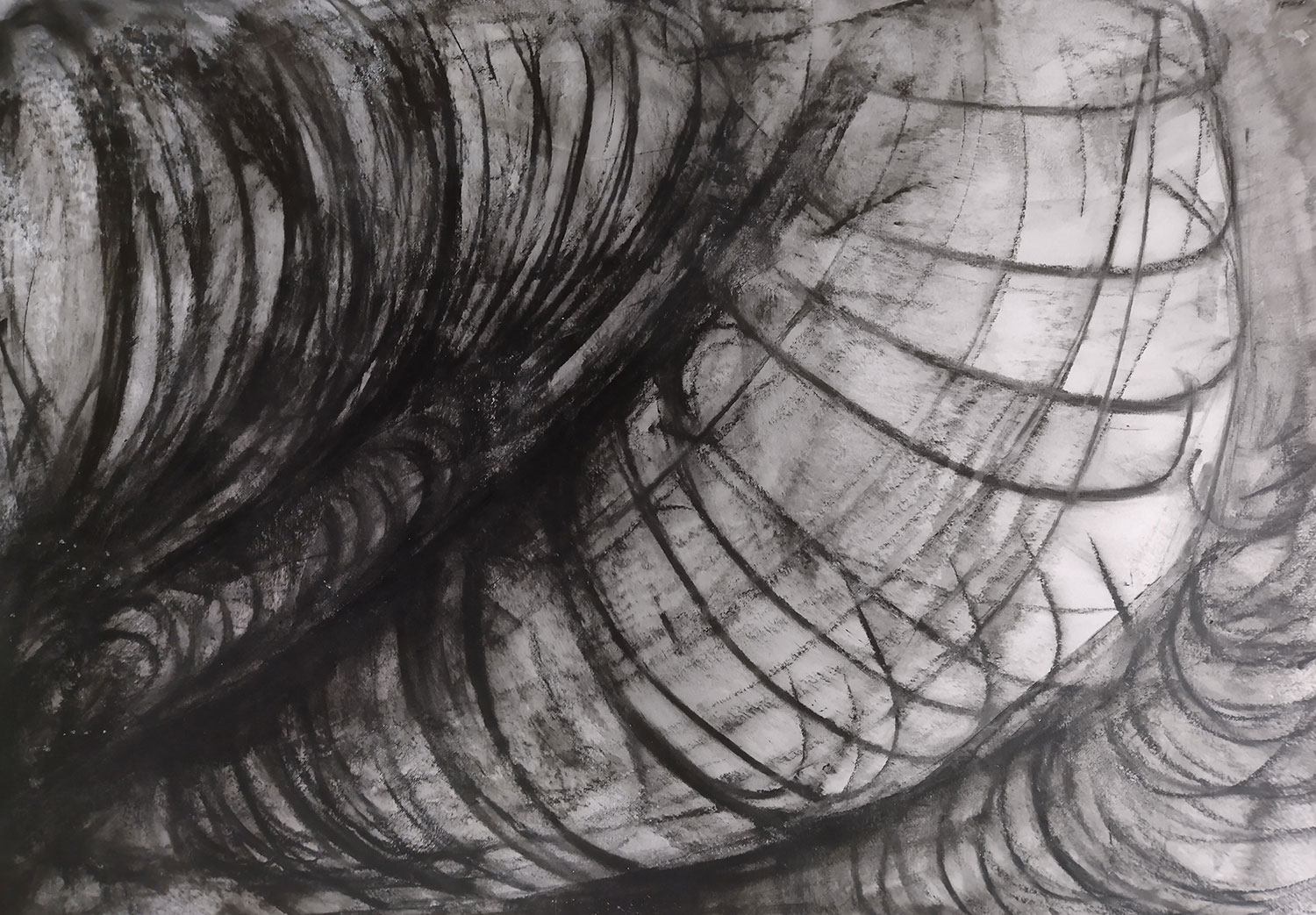
A few years ago I asked myself a question that has shaped everything since: what does the wind look like? How can we visualise the invisible?
I became fascinated by the wind — its movement, its traces, its influence on the world around us. Before I built any machines, my first response was to experience and record the wind directly through field sketches and intuitive mark-making, alongside large expressive works on paper drawn from memories and lived experiences of my relationship with the wind.
That exploration intensified in February 2022, during Storm Eunice, when the Met Office issued a rare red weather warning. Locally we were seeing gusts of up to 80mph. I went out into the storm to experience the wind more directly — to feel its force and instability — and to record whatever I could. Several sketches came out of that moment: urgent, raw marks made in conditions that were almost impossible to work in. They captured something of the chaos the wind can bring, and deepened my desire to understand its movement more truthfully.
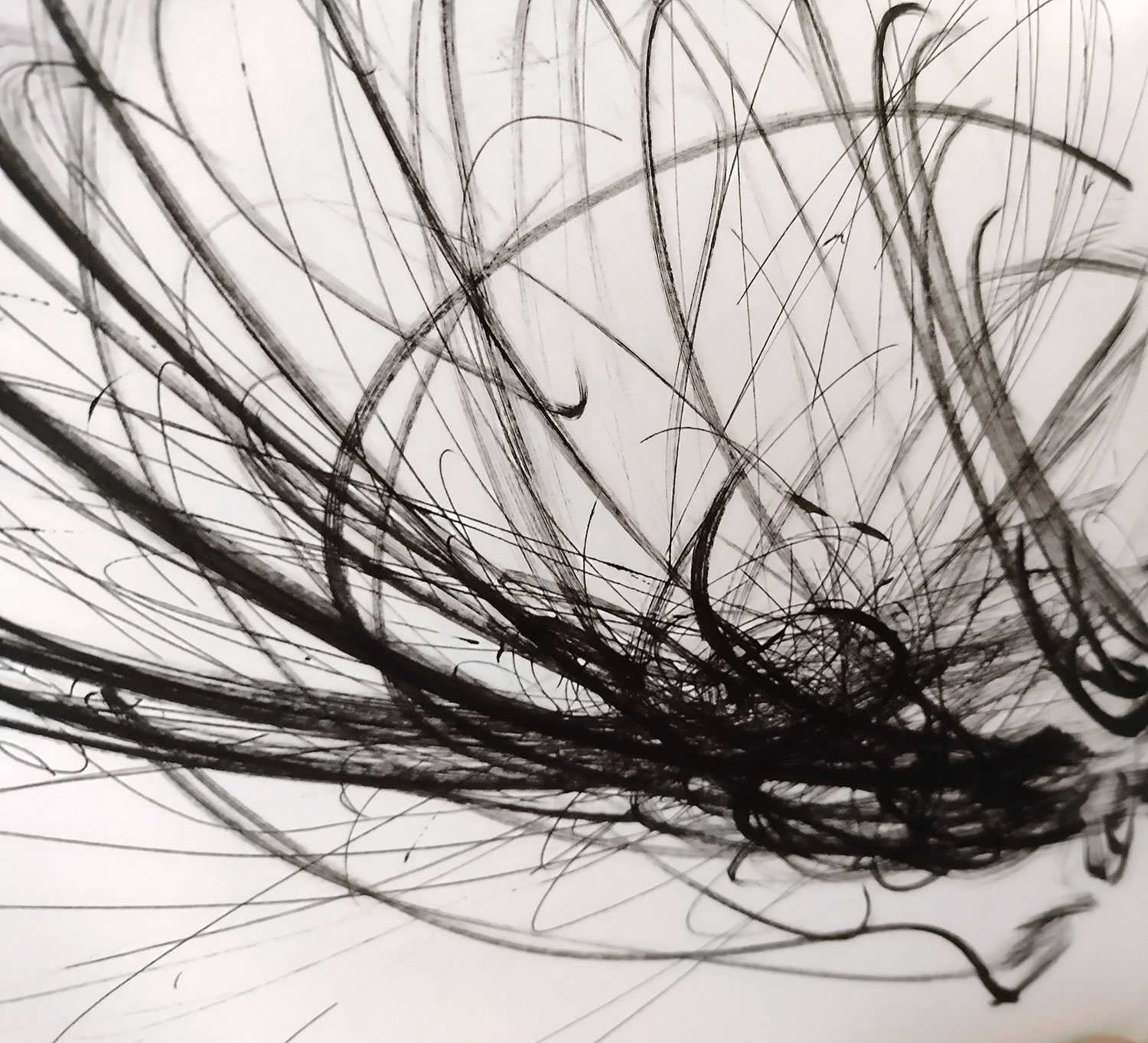
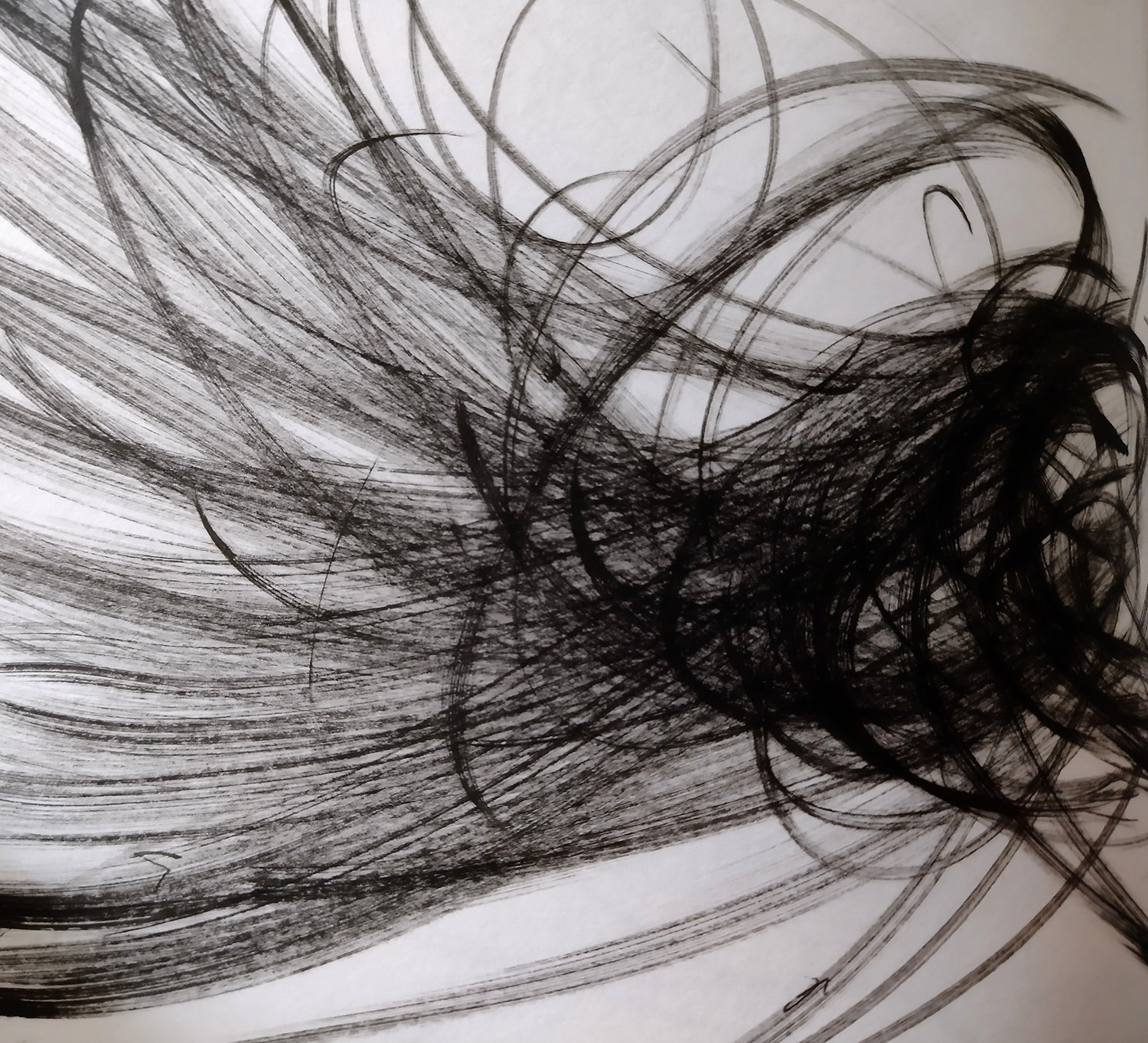
Wind Conceptualizations
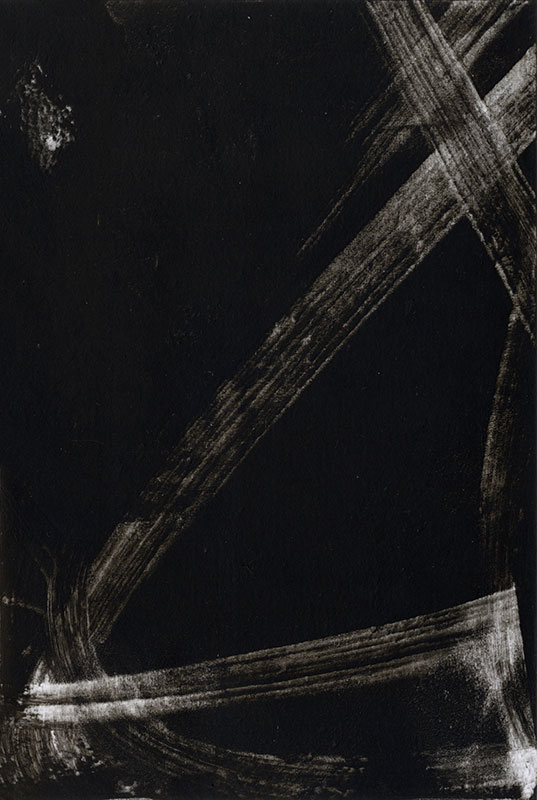
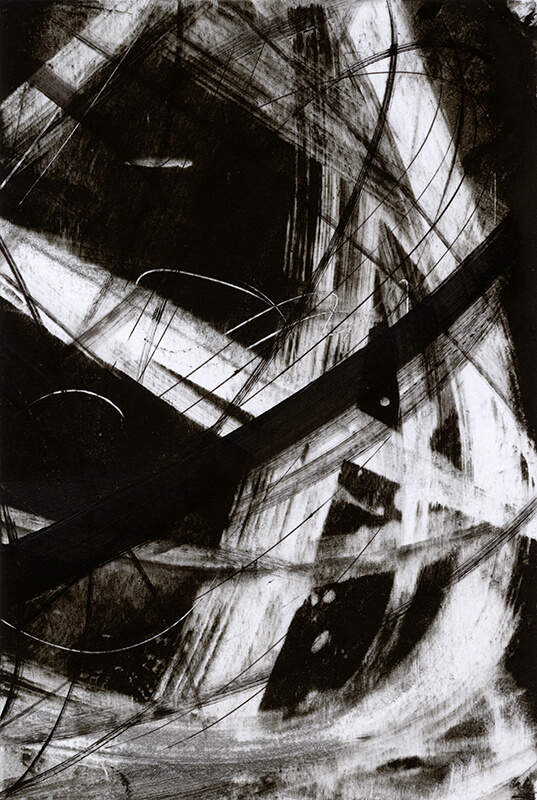
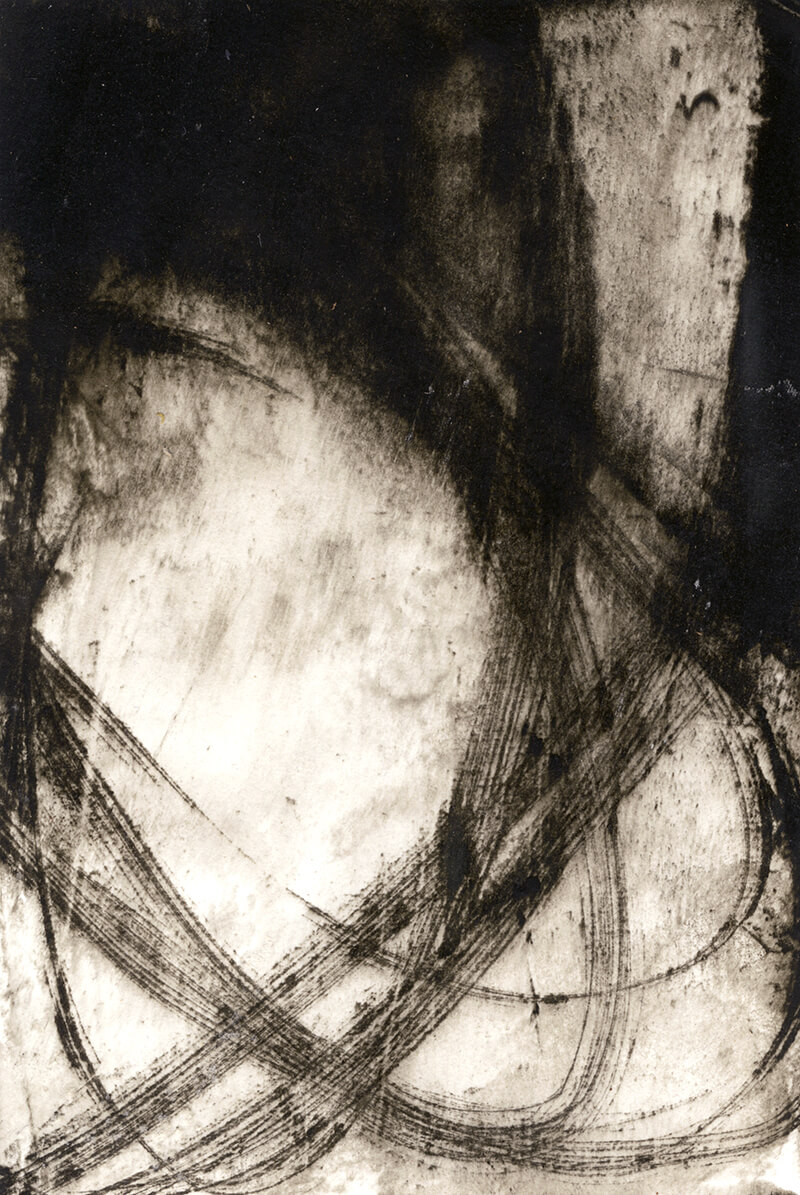
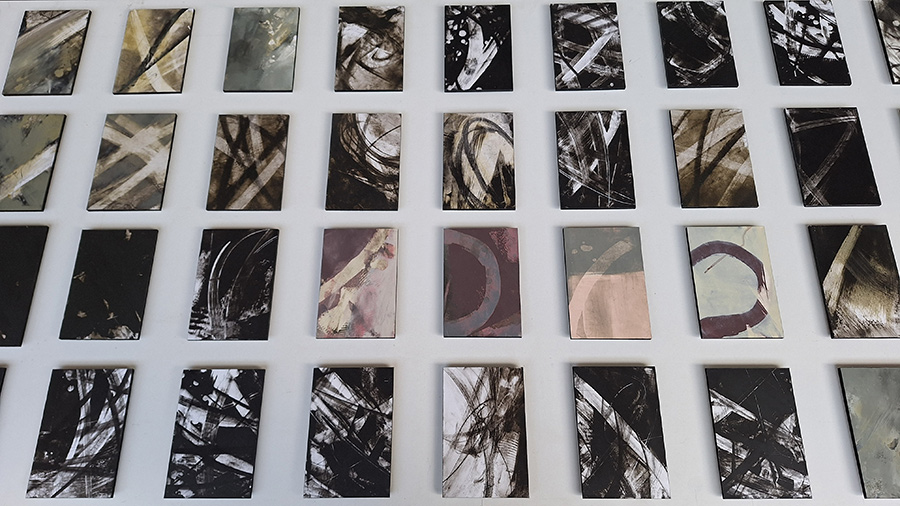
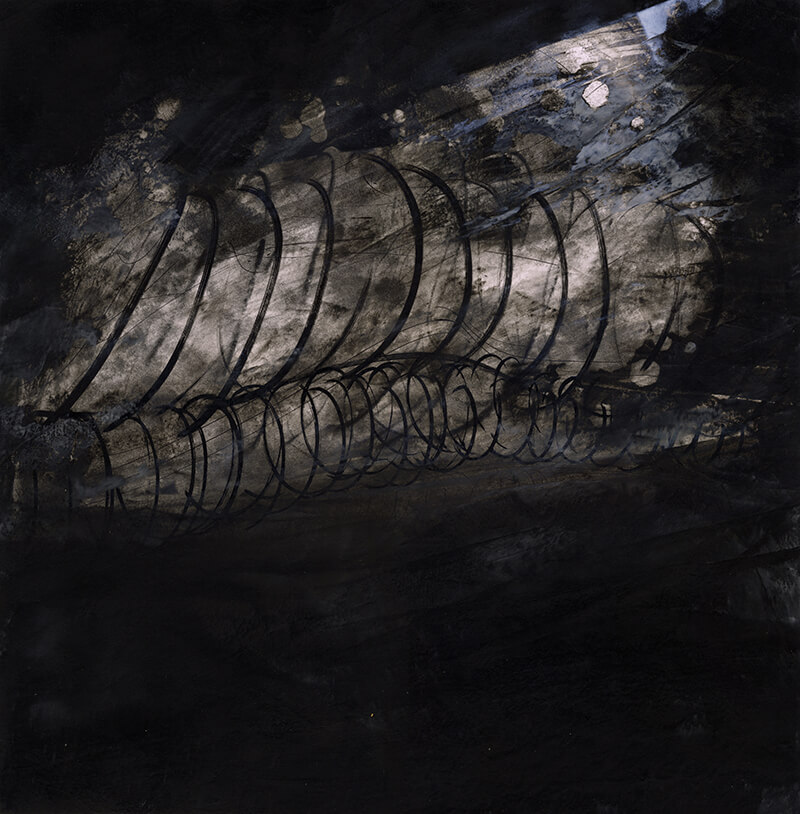
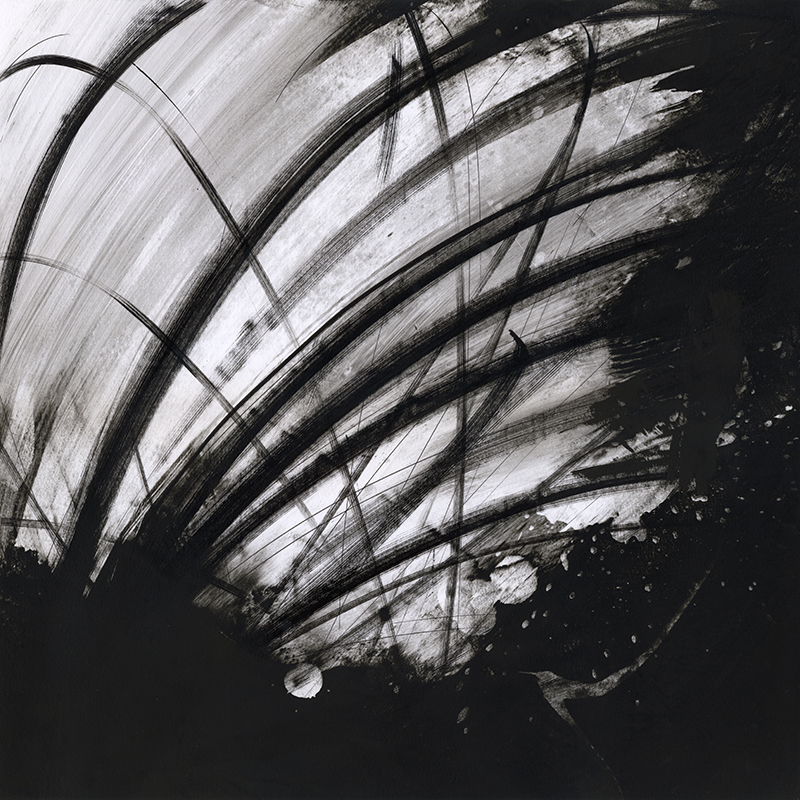
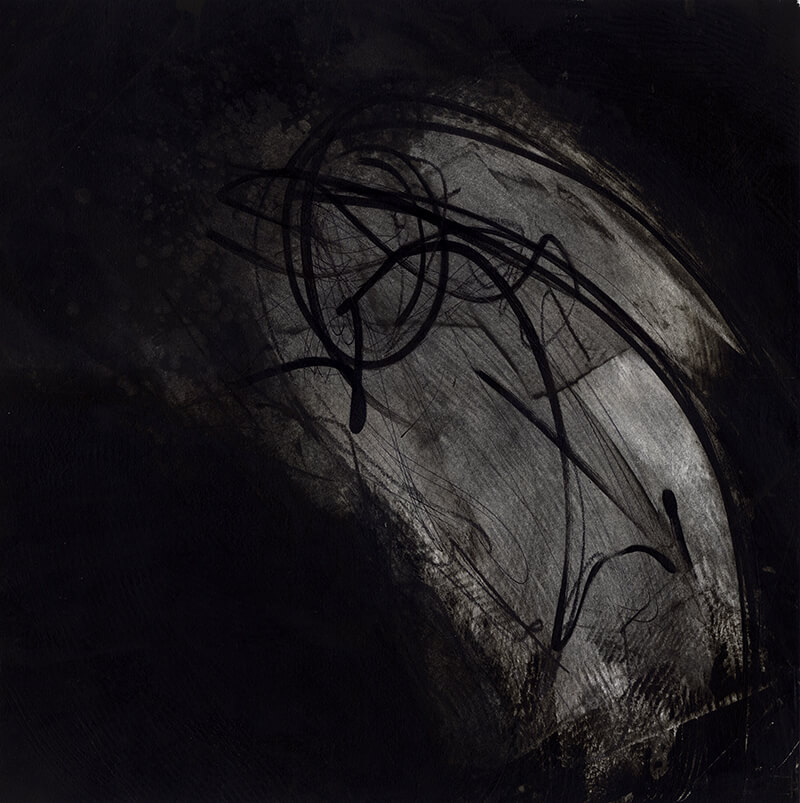
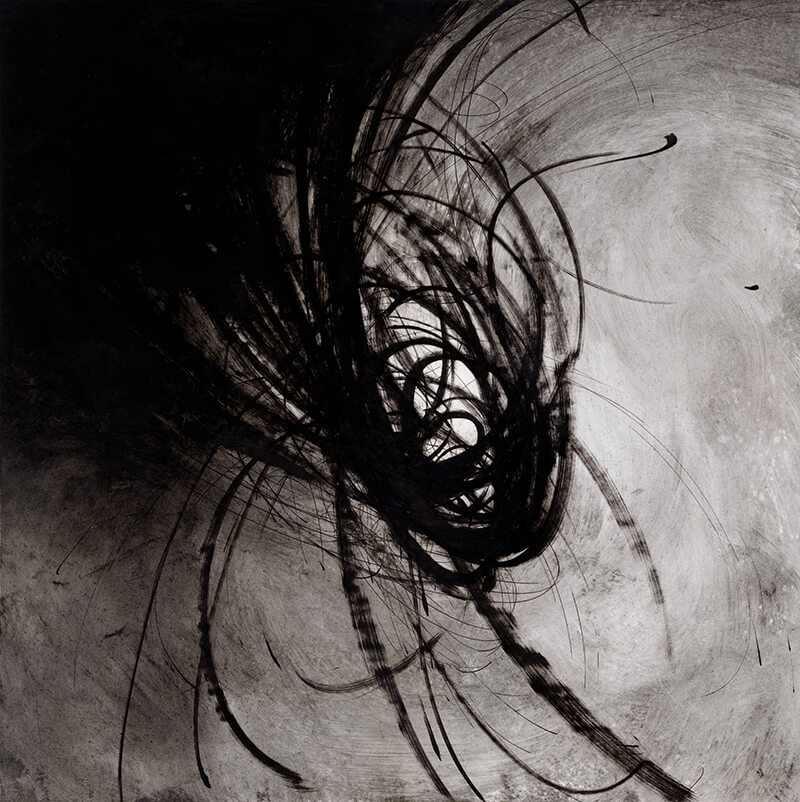
As the field sketches and large expressive drawings accumulated, I began developing a series that would consolidate and focus these experiences into my first major body of work called “Wind Conceptualizations” (title spelling intentional)— a large series of paintings that embody those first attempts to observe and interpret wind in motion.
The Slabs
Small 12cm x 18cm – Works on Paper mounted on Board
The 42s
Medium 42cm x 40-somethings – Works on Paper mounted on Board
The rise of the machine
The Pendulum wind drawing machineThe Pendulum wind drawing machine
I realised how much unconscious interpretation was slipping into my drawings. There’s nothing wrong with that — it’s part of how we make sense of the world — but I became curious about what I was missing or misinterpreting.
Sketching in the field was often overwhelming; the movement was too complex to process in real time, and I needed a way to understand it without assumption.
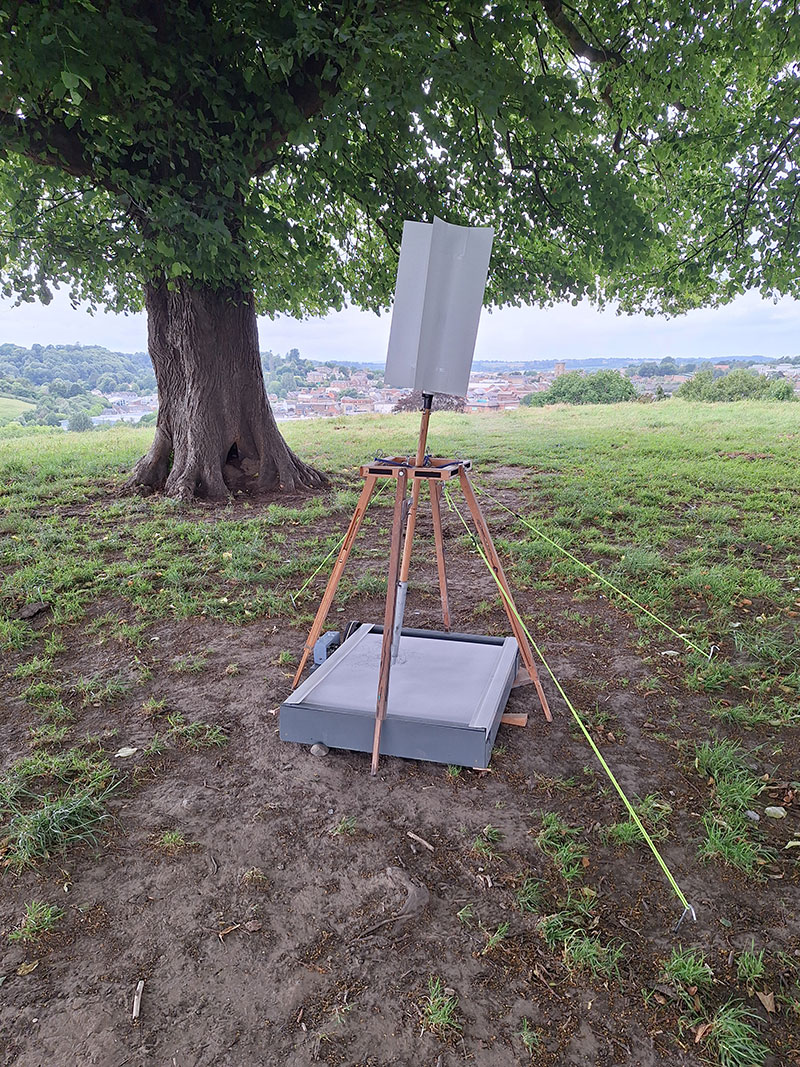
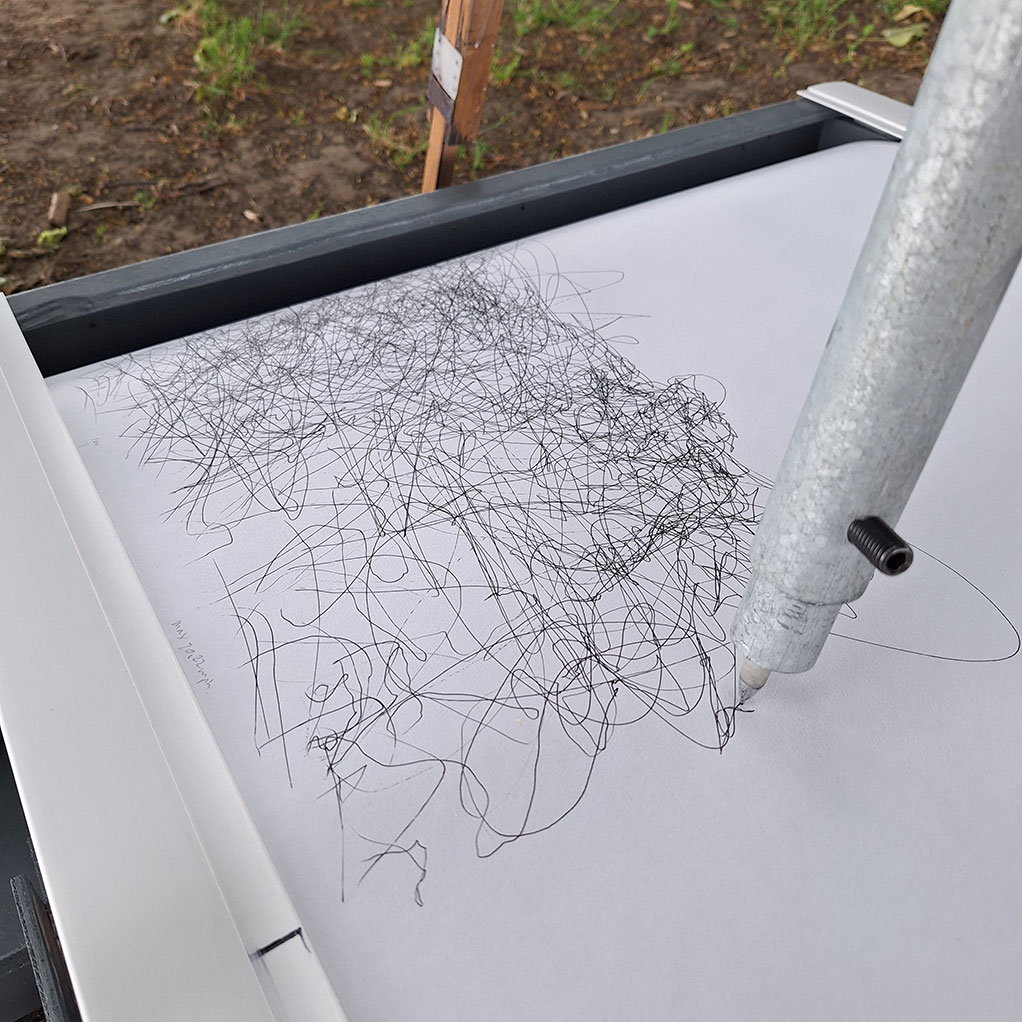
Watching how trees and grasses bend and return to centre, I imagined the lines their canopies might trace if you could see their movement suspended in space. That became the basis for the Pendulum Wind Machine: a simple apparatus that allows the wind to move a suspended pen, leaving a trace with each breath and falling back to a resting point as the air calms.
Early development of the Pendulum Wind Drawing Machine – Anemograph – saw iterative field testing. From the shelter of my garden to exposed disused quarry hills of Ham Hill County Park. Each field test would reveal the need for a new enhancement or highlight a problem.
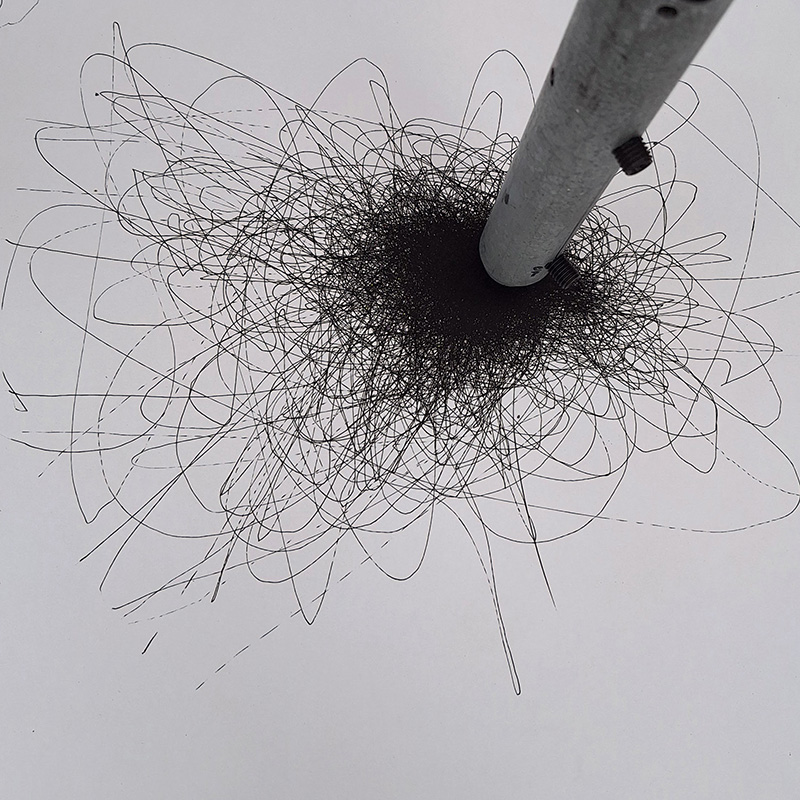
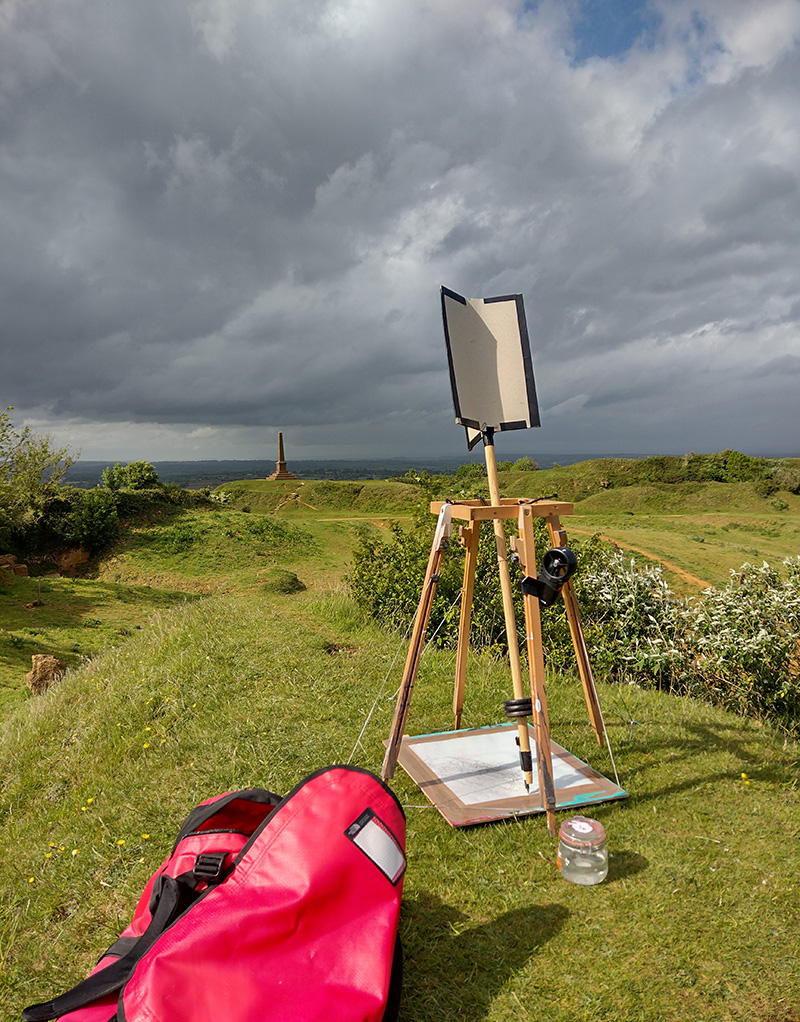
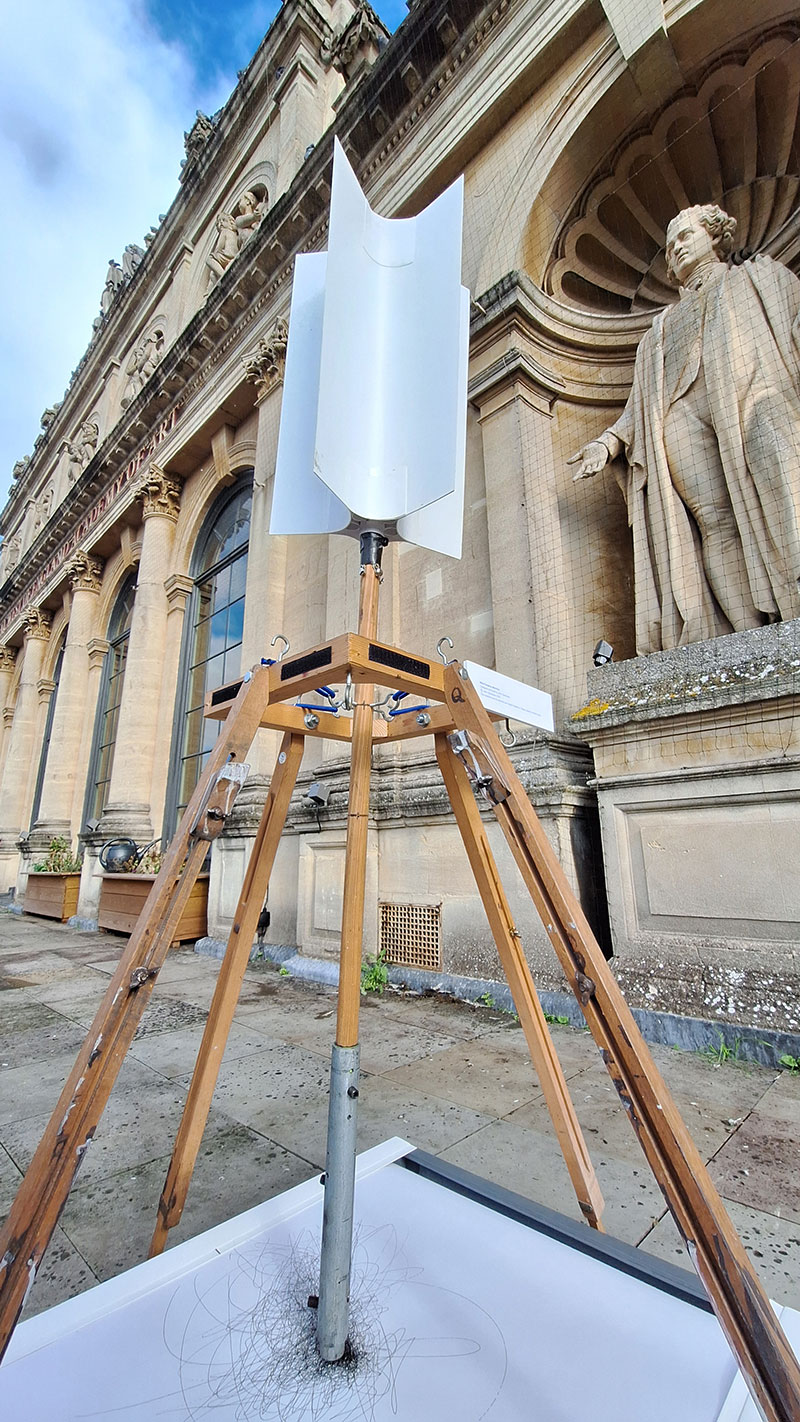
Anemograph — Pendulum Wind Drawing Machine
Designed and built John Gammans.
© John Gammans 2022–2025
Fieldwork
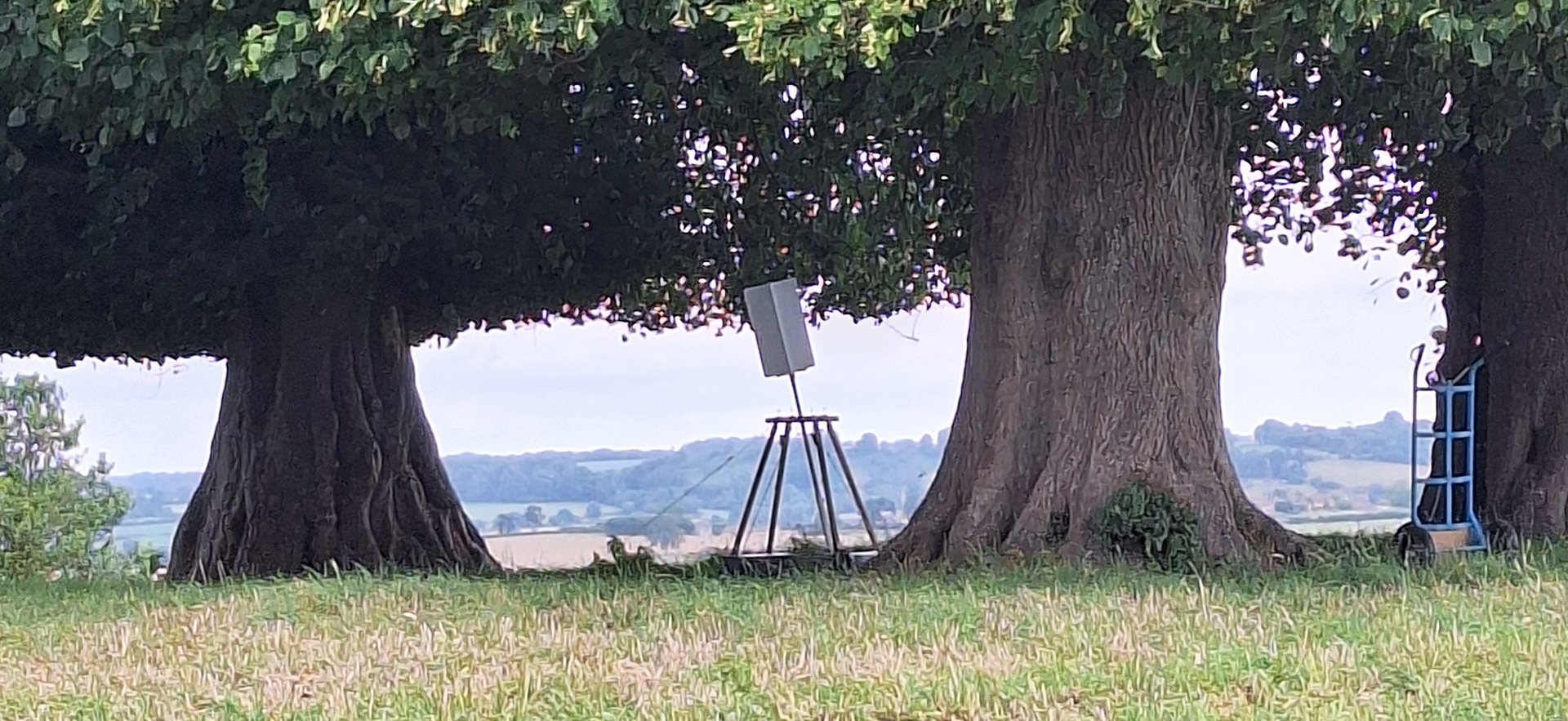
Ham Hill County Park
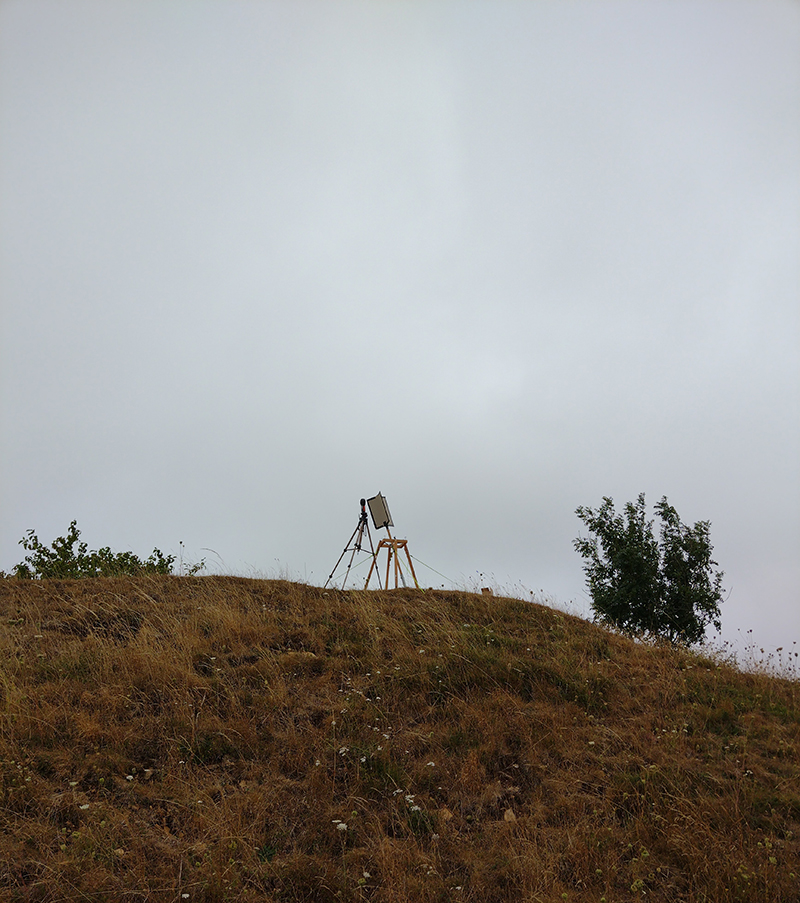
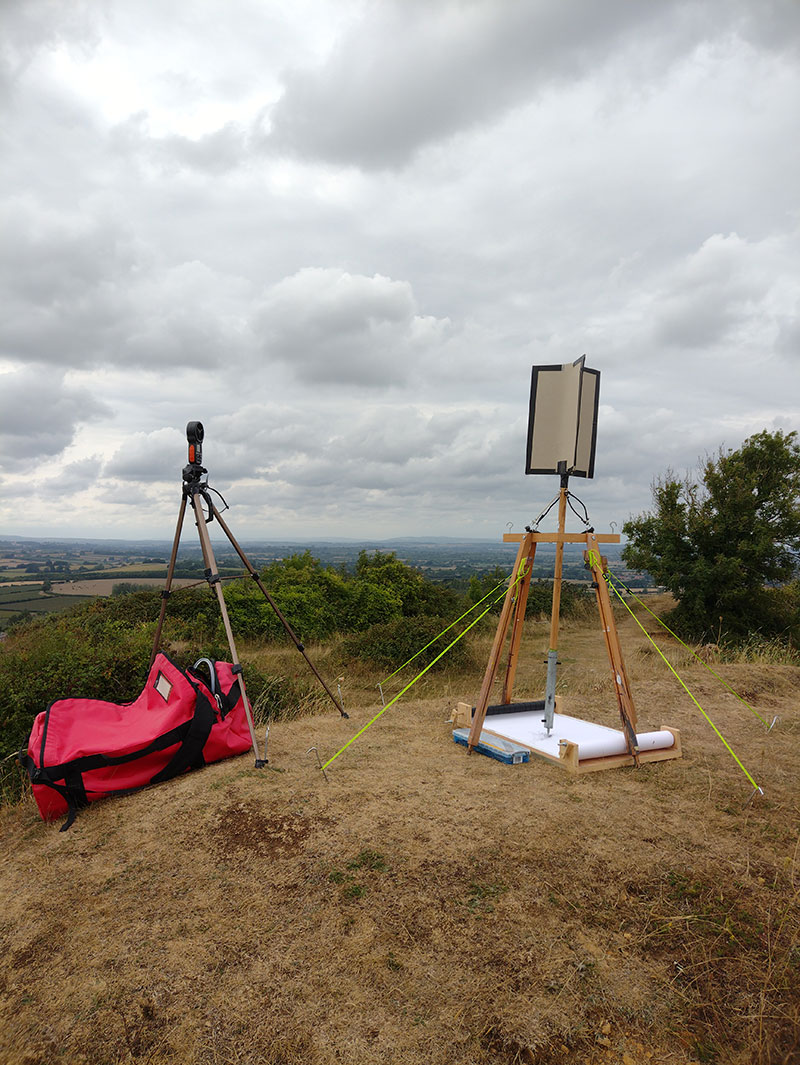
Ham Hill Country Park has been the testing ground for much of my Anemograph development.
As a geological Site of Special Scientific Interest, and the remains of an Iron Age hill fort, medieval village and Victorian quarry, the hill forms a distinctive high point in the local landscape. Its sloping ramparts and hilly mounds catch the wind from several directions, creating a natural amphitheatre of moving air.
Witcombe Valley — the site of a deserted medieval village within Ham Hill Country Park — offered the perfect place to test how wind behaves across different levels of a landscape. I set up the Anemograph in three positions: one in the valley floor, one on the slope, and one on the ridge above. My aim was to compare the differences in airflow across these three zones.
With only a single instrument, the experiment couldn’t be fully synchronised, and that limitation became immediately obvious. Even so, the three drawings showed striking differences in how the wind moved through each part of the valley.
This small test revealed how much could be learned from simultaneous recordings — and how essential multiple instruments will be for understanding the wind’s behaviour across a landscape.
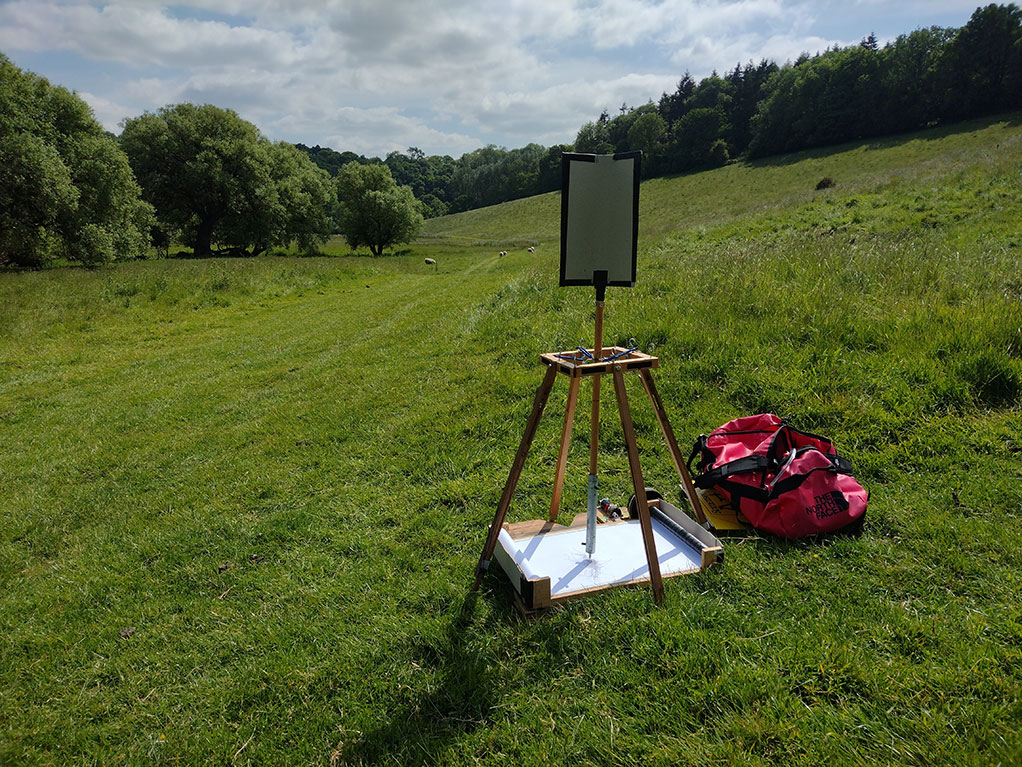
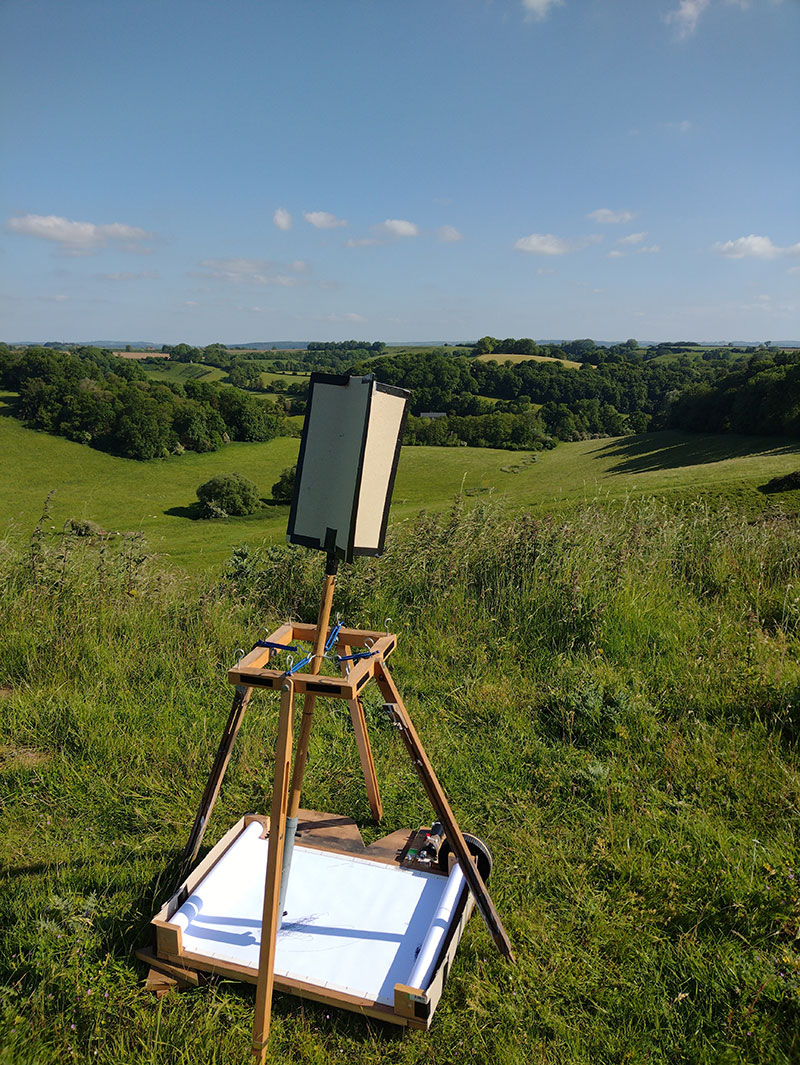
Wyndham Hill
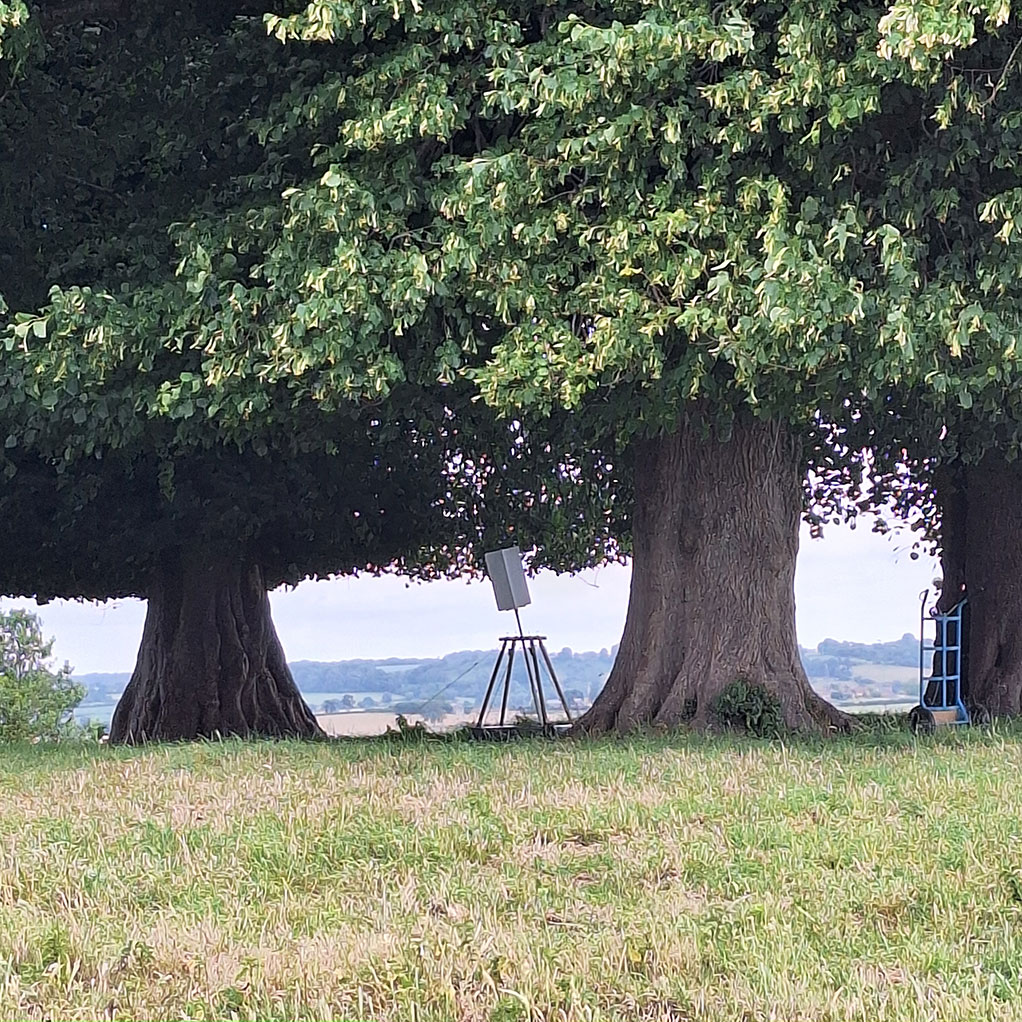
Wyndham Hill is an especially interesting site, crowned by four trees arranged in a square. Setting up the Anemograph in the centre revealed wind behaviour I hadn’t encountered elsewhere. As the air approaches the trees it slows, splits, and is forced up and around their canopy, accelerating through the gaps before dropping into turbulence on the leeward side.
I believe the Anemograph is responding to this churn of uplift, eddies and shifting pressure — a pattern of turbulence created entirely by the trees’ arrangement.
Anemograms
Wind Drawings

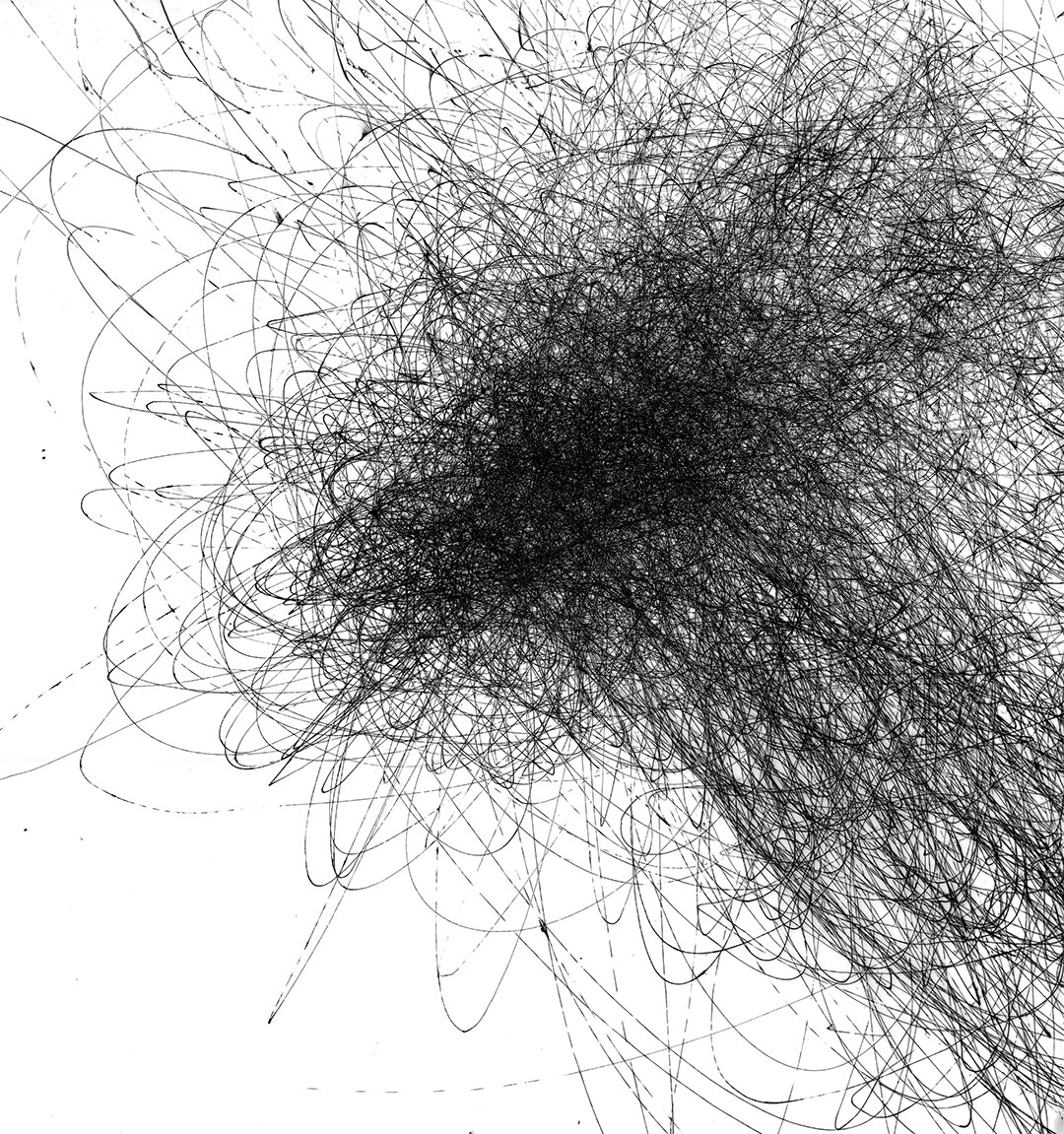
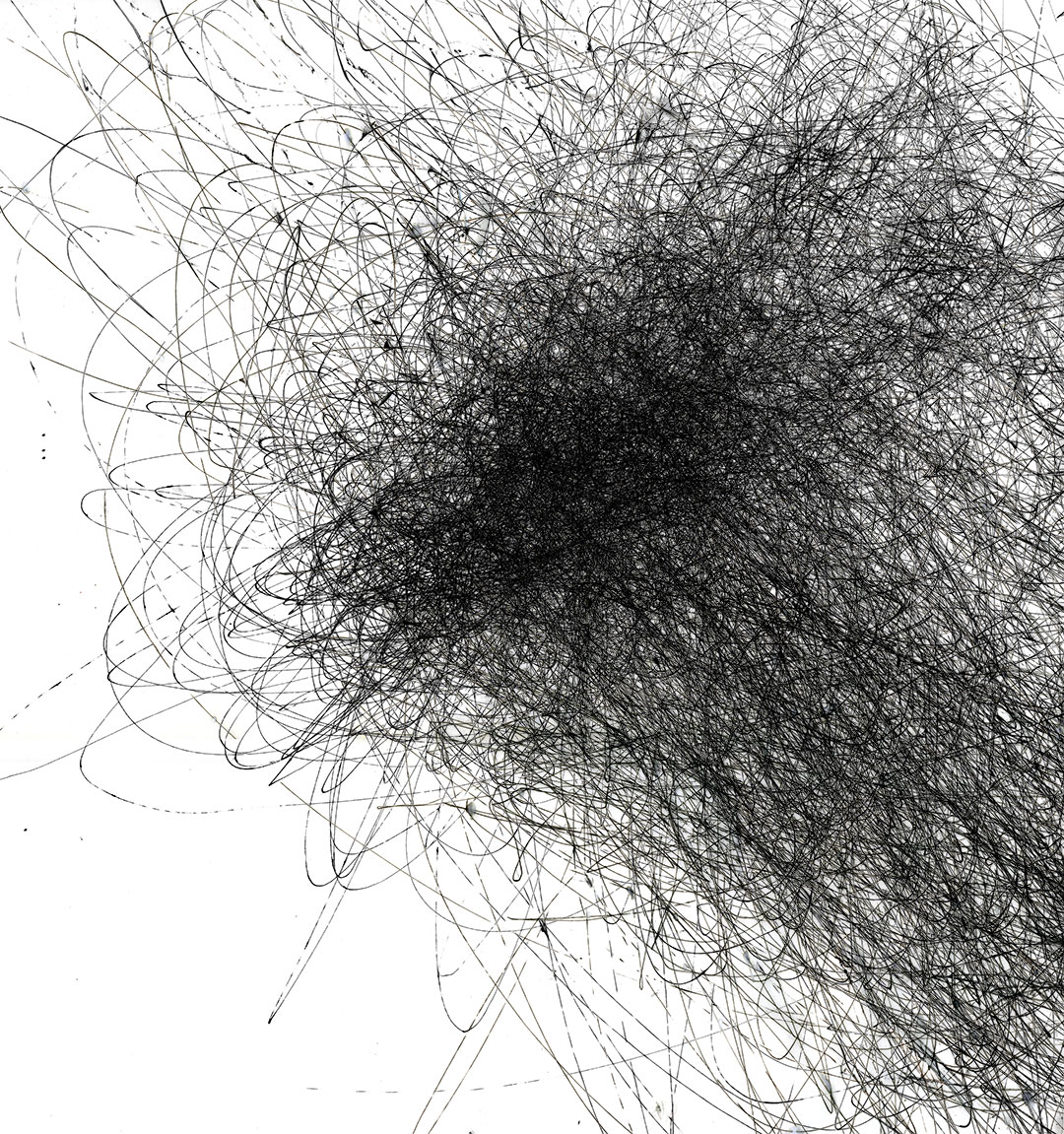
Wind Drawing 20.05.2022
Produced using my Pendulum Anemograph with wind speeds gusting up to 24mph. Using three layers of tracing paper. Each layer was replaced as tearing took place.
Layer 1 – Duration 0-50mins.
Layer 2 – Duration 50-60mins.
Layer 3 – Duration 60-80mins
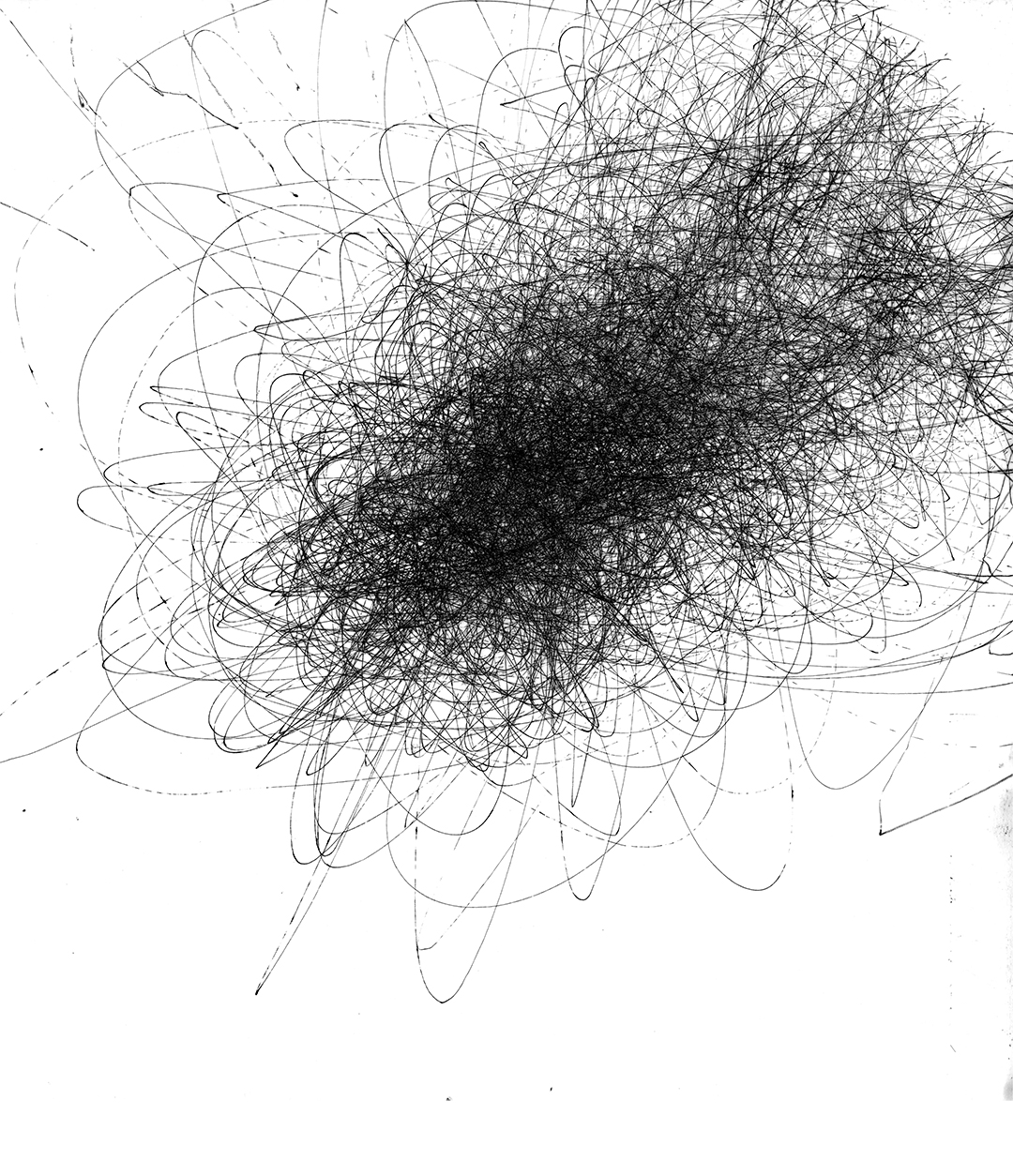
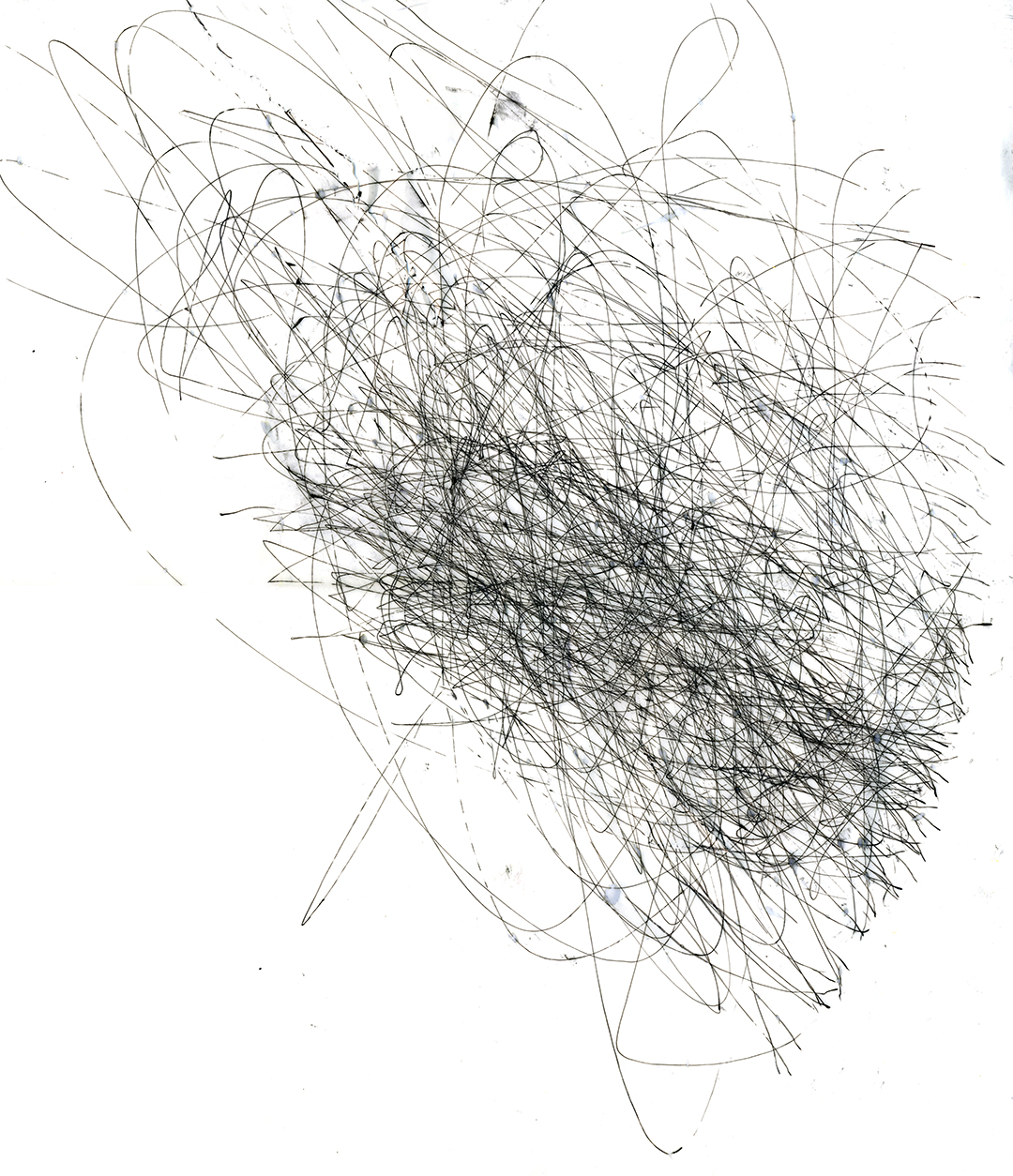
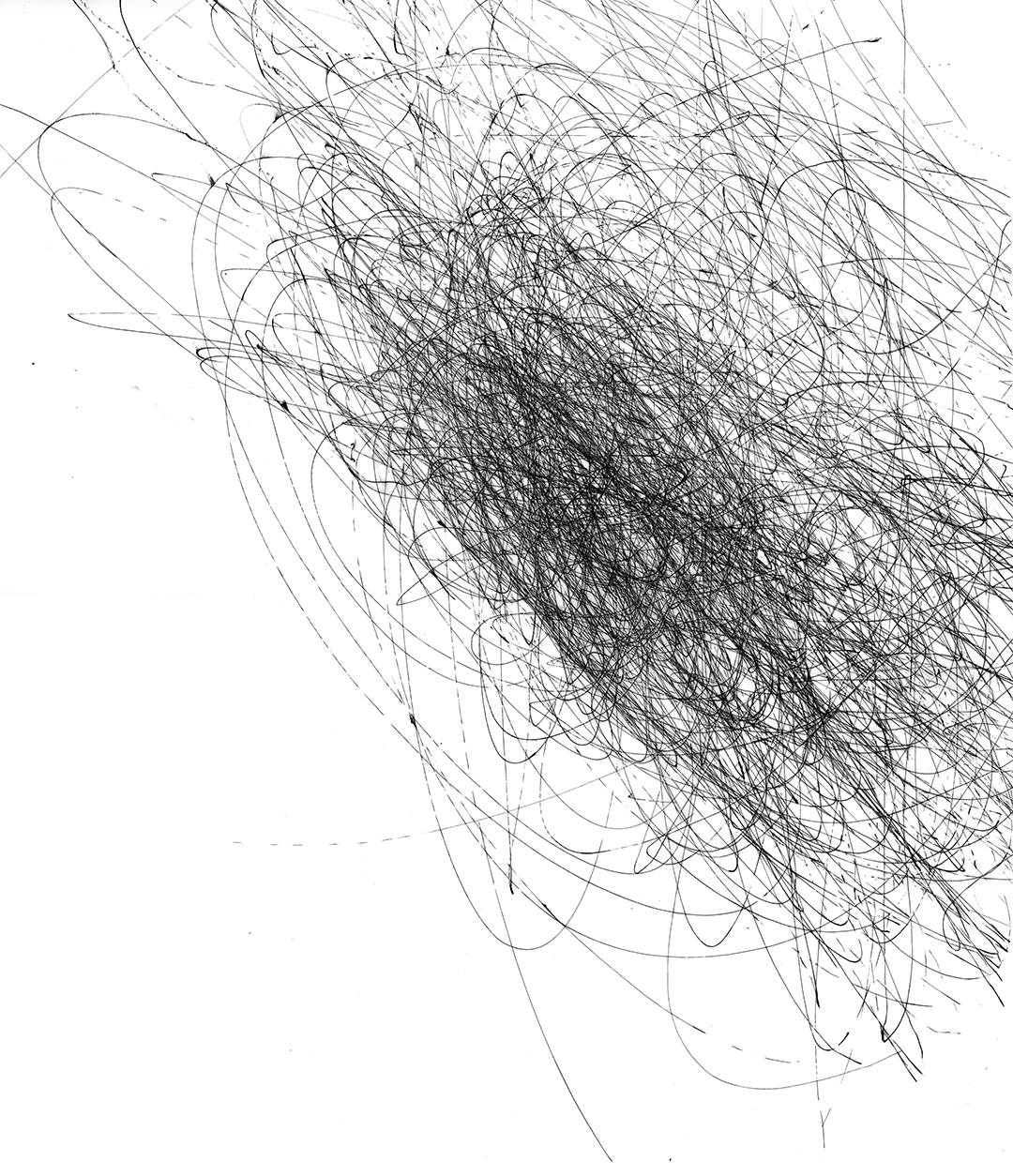
PROGRESSIVE WIND DRAWING 4.8.2022 – 2.5hrs
This is the first progressive wind drawing produced following the construction of my custom made paper conveyor belt. Prior to motorization the transfer belt was manually rotated, approximately 1 mm every 6 seconds. For the first time not only recording the wind’s interaction in space but also over time.
Duration – 2.5 hours
Speed (Approx: 0.2mm/s)
178cm x 37cm
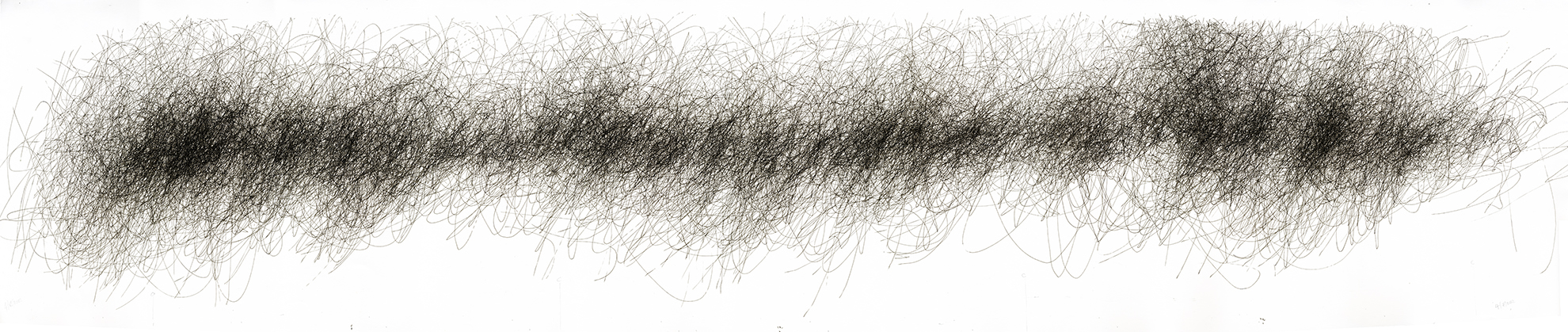
PROGRESSIVE WIND DRAWING 3.09.2022
This progressive wind drawing was produced following the new addition of dampeners to decrease the sensitivity, meaning winds below 8 mph were barely registered. Without motorization the transfer belt was manually rotated, approximately 1 mm every 6 seconds.
Duration – 3 hours
Speed (Approx: 0.16mm/s)
178cm x 37cm

Wind Drawing 13.05.2024
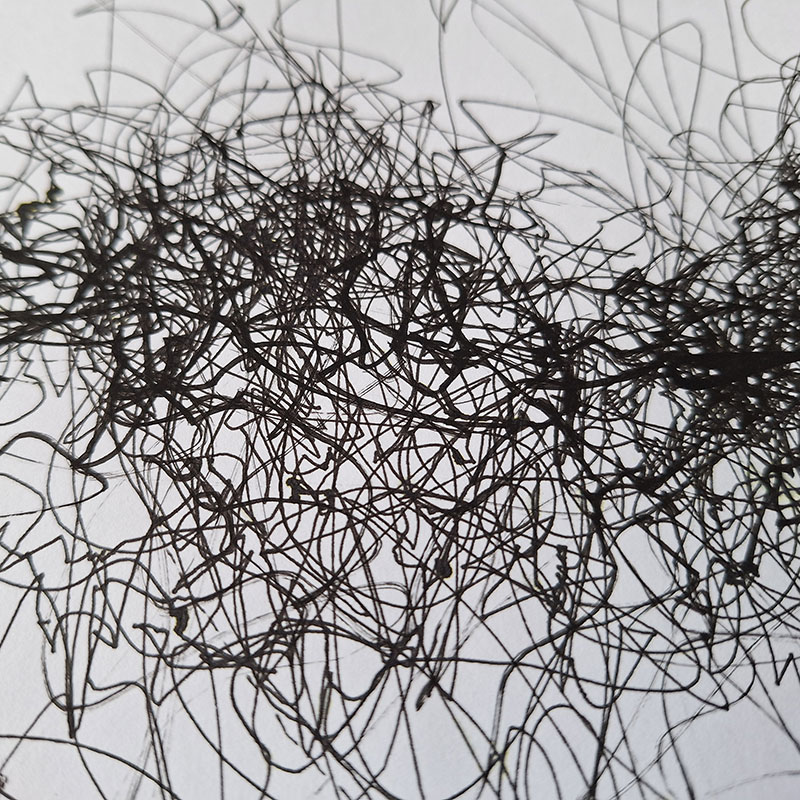
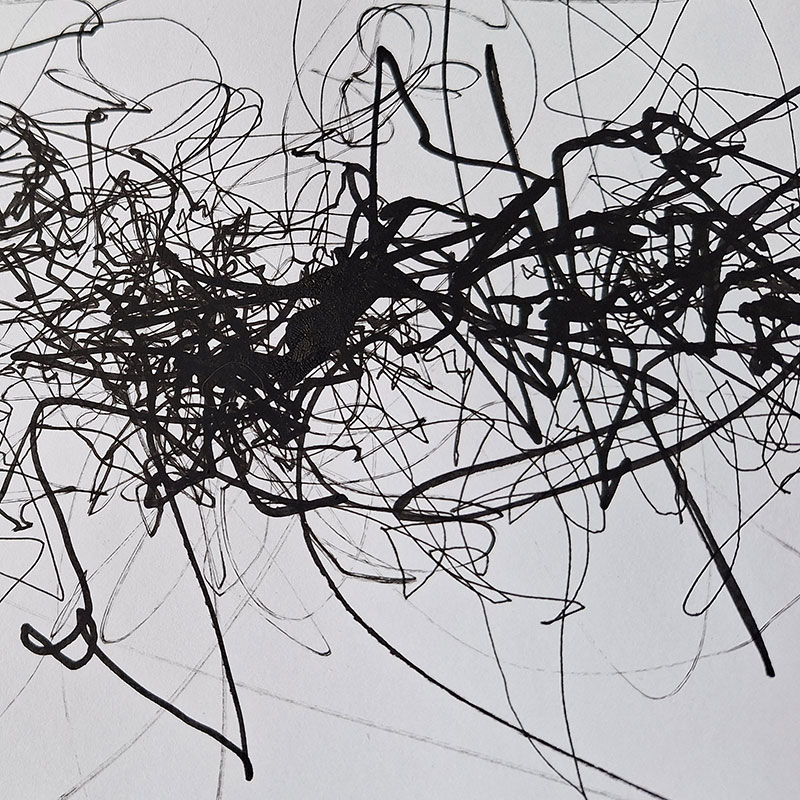
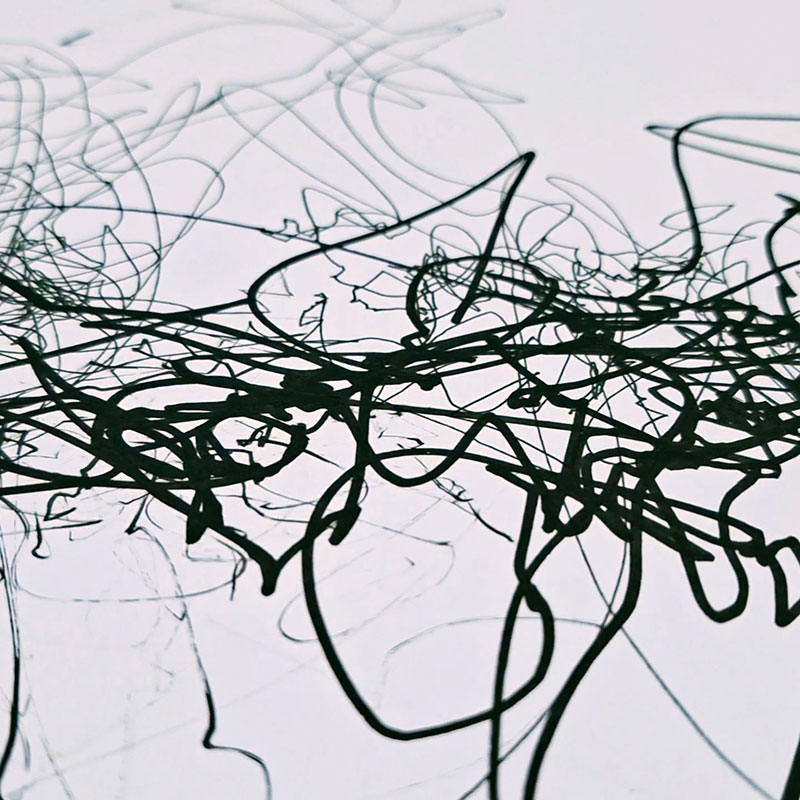
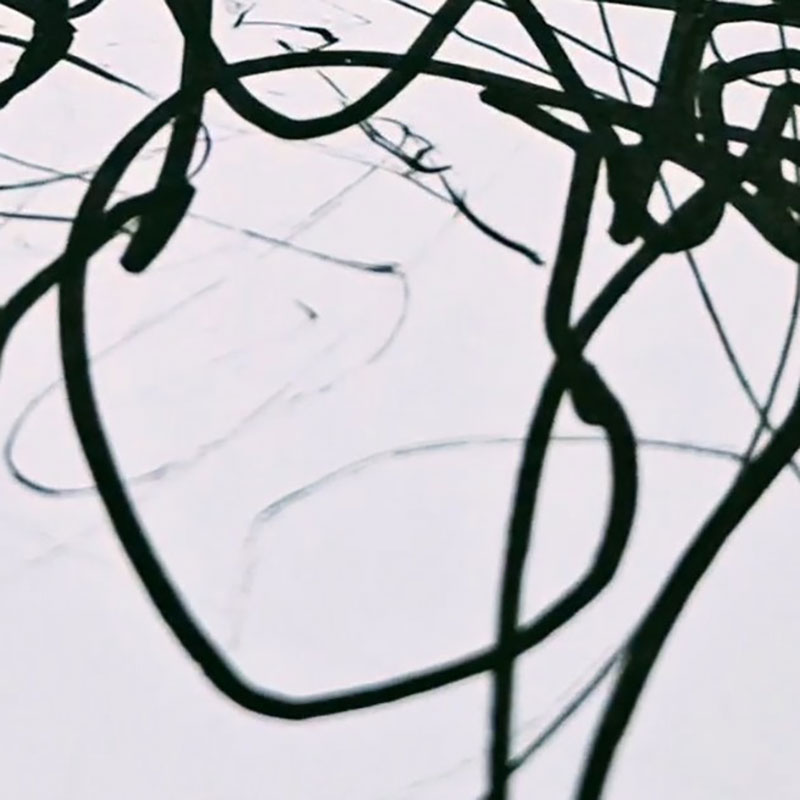
This Anemogram is the result of an experiment exploring how wind activity might be recorded from the same point in space but over two different periods of time. I made two passes of 45 minutes each; to distinguish between them, I used a thicker pen for the second pass.
The combined drawing created an unexpected depth between the two line weights, revealing subtle layers of movement and highlighting the intricate events that unfold within a relatively short period. These observations later formed the basis for a series of works called Interplay.
Pass 1 – 1.15pm – 2.00pm
Pass 2 – 3.00pm – 3.45pm
Duration – 90mins
Paintings
Interpreting Anemograms
Interpretion
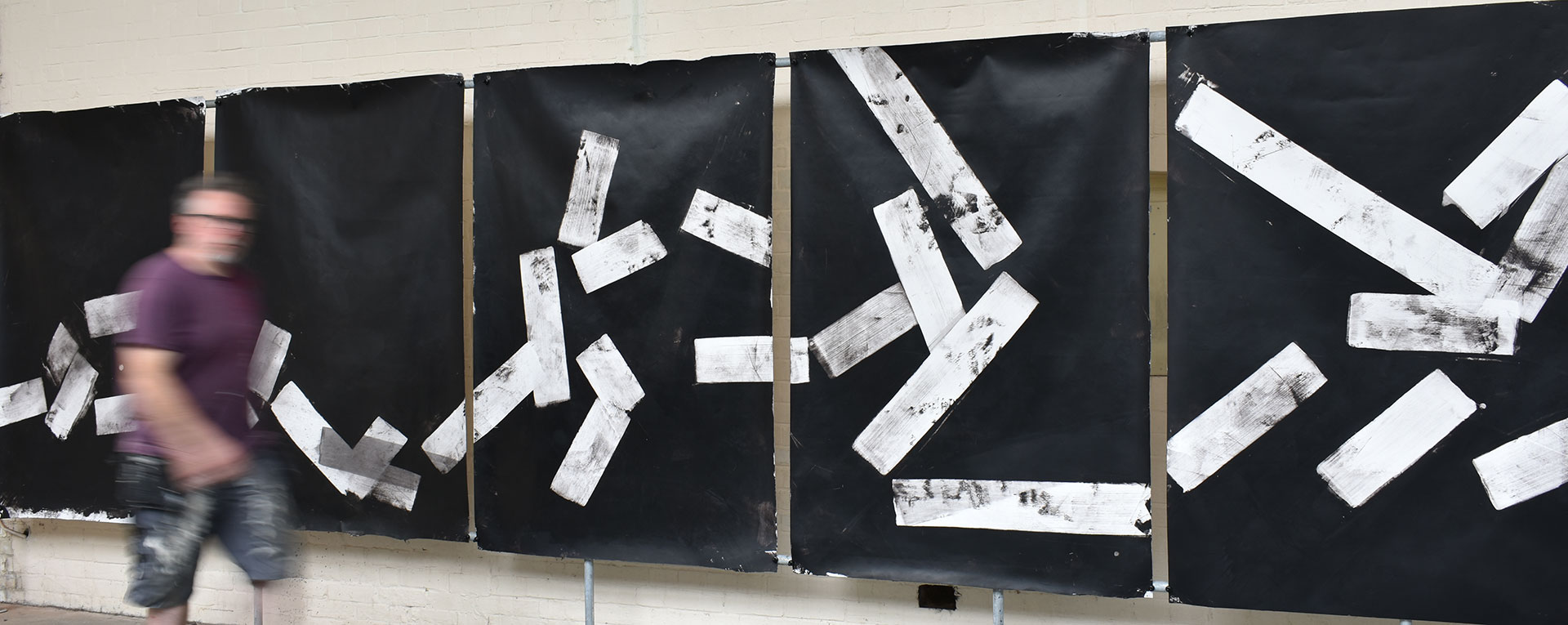
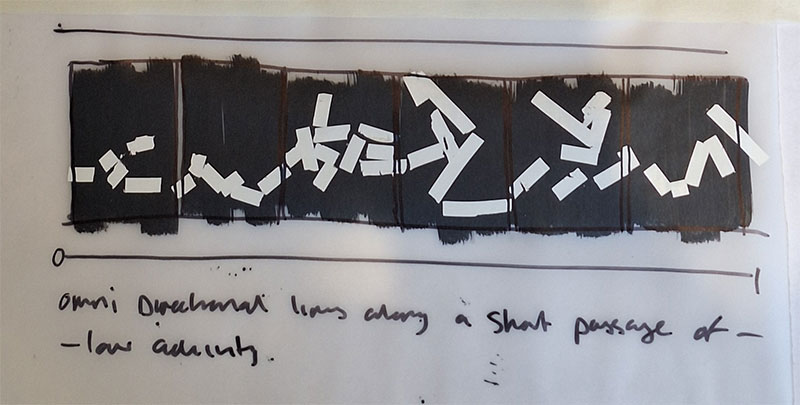
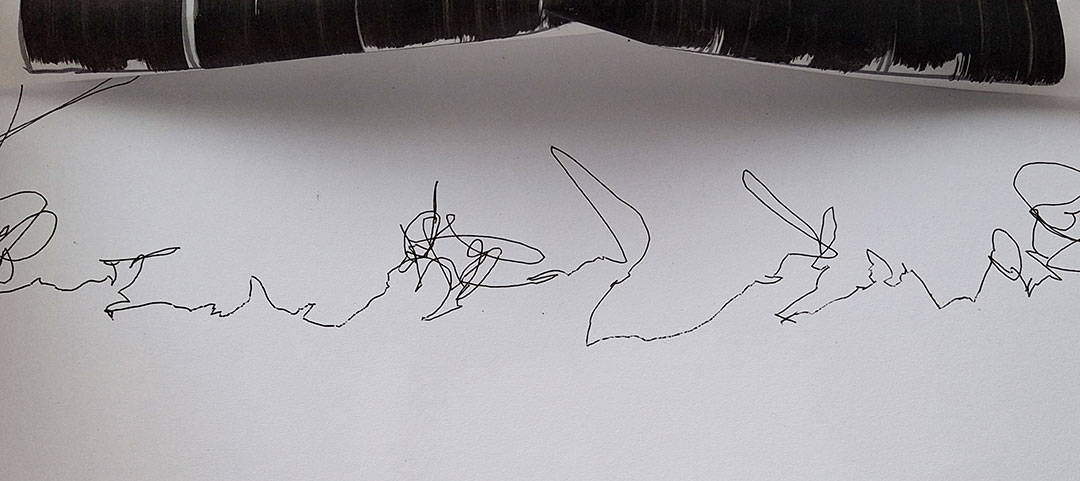
This large experiential polyptych was created to explore how the dense line data recorded by the Anemographs could be interpreted and broken down into its most basic transitions. Using a wind drawing with relatively low activity — and speeding up the drawing bed to elongate the record — I was able to isolate directional shifts, hesitations and gusts, almost like pulling apart a tangled ball of string.
Along the paths where noticeable changes in acceleration occurred, I placed rectangular indicators or lozenges. Some barely touch, others collide or glance against the next, creating an almost tumbling effect. The discontinuous line between them introduces a kind of disconnection, suggesting a relationship between events while allowing each indicator to mark a distinct moment of change.
Incorporating the wind data gives the work a grounding in truth that I find deeply compelling. Although artistic decisions were made — choosing what counted as a meaningful change, what to include or disregard — the erratic shifts in trajectory are shaped by the wind itself. They would appear very differently if they were invented by hand.
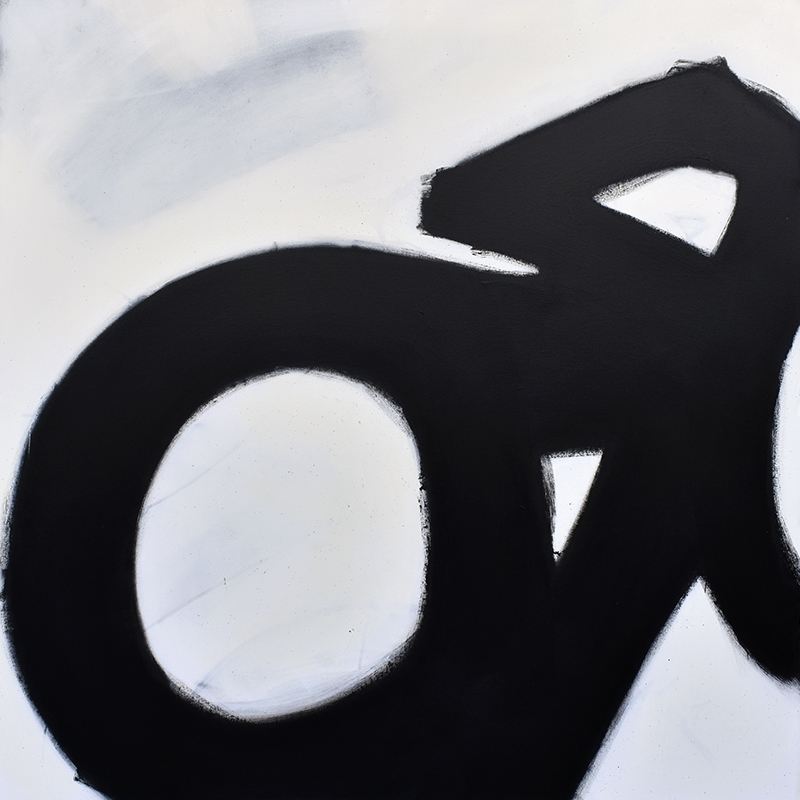
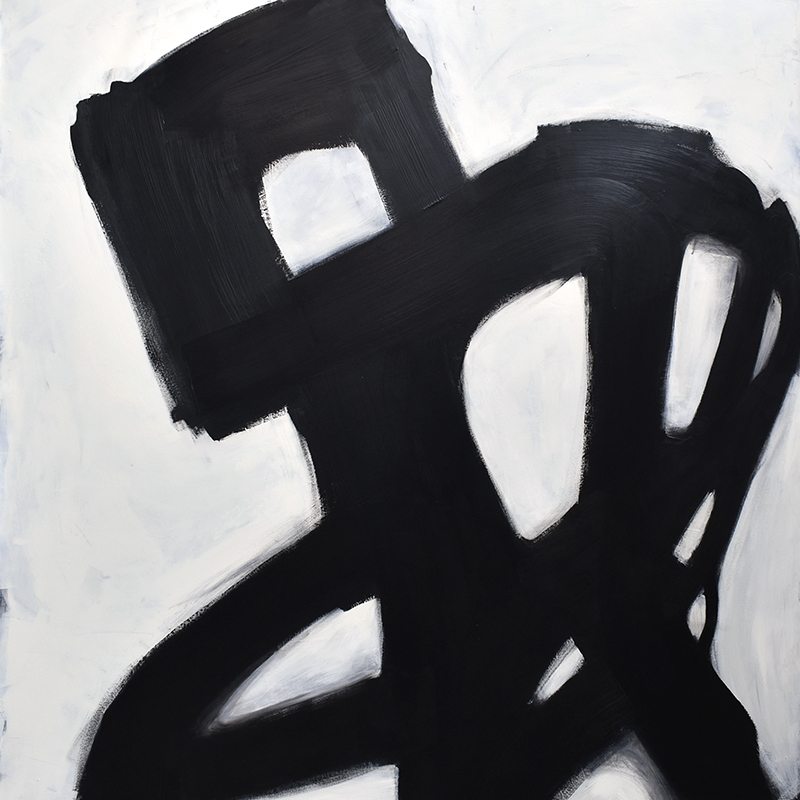
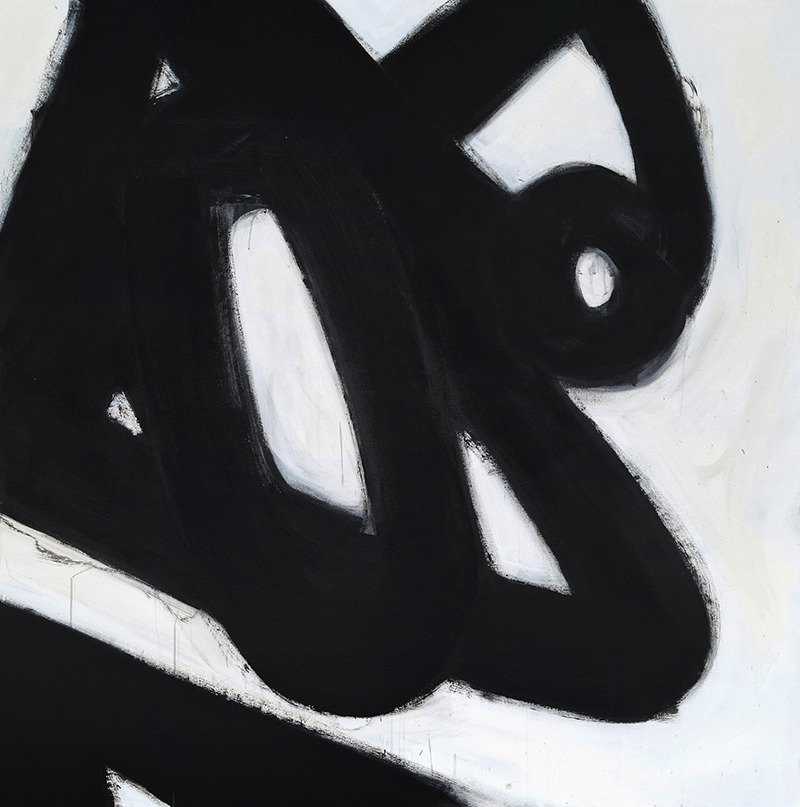
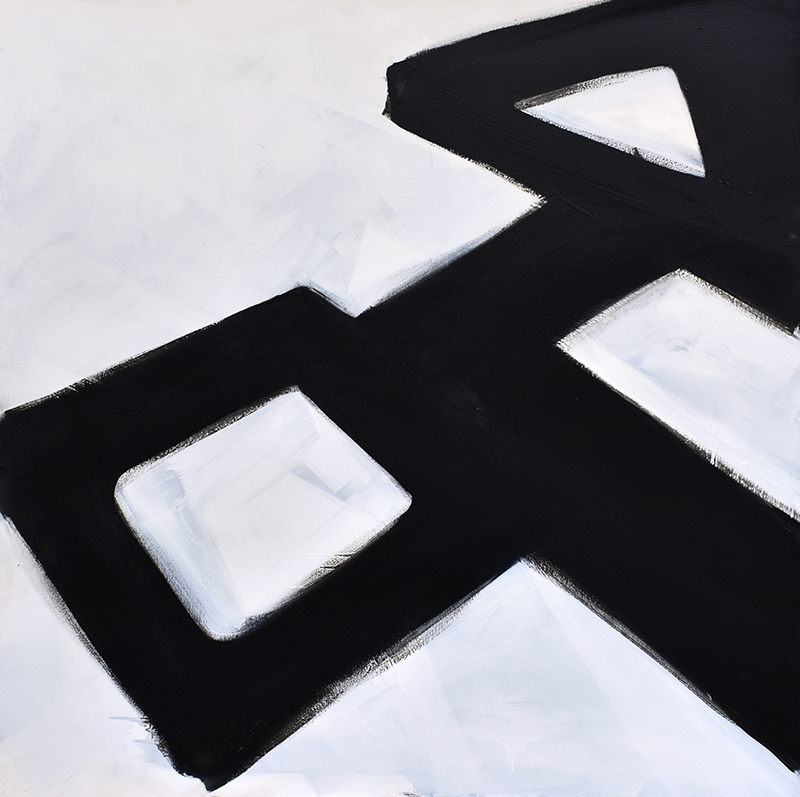
Interplay Series
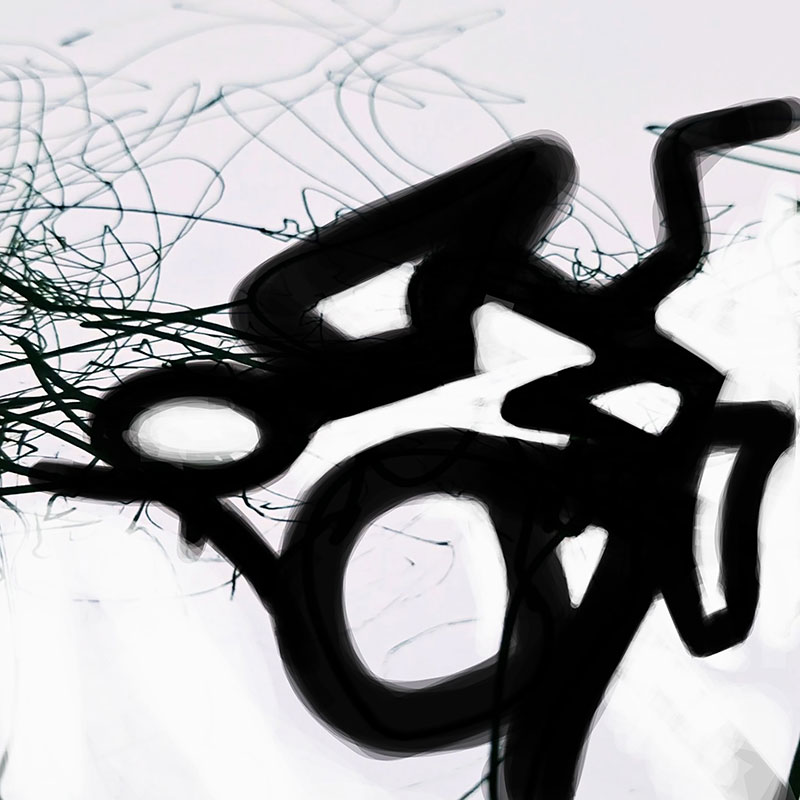
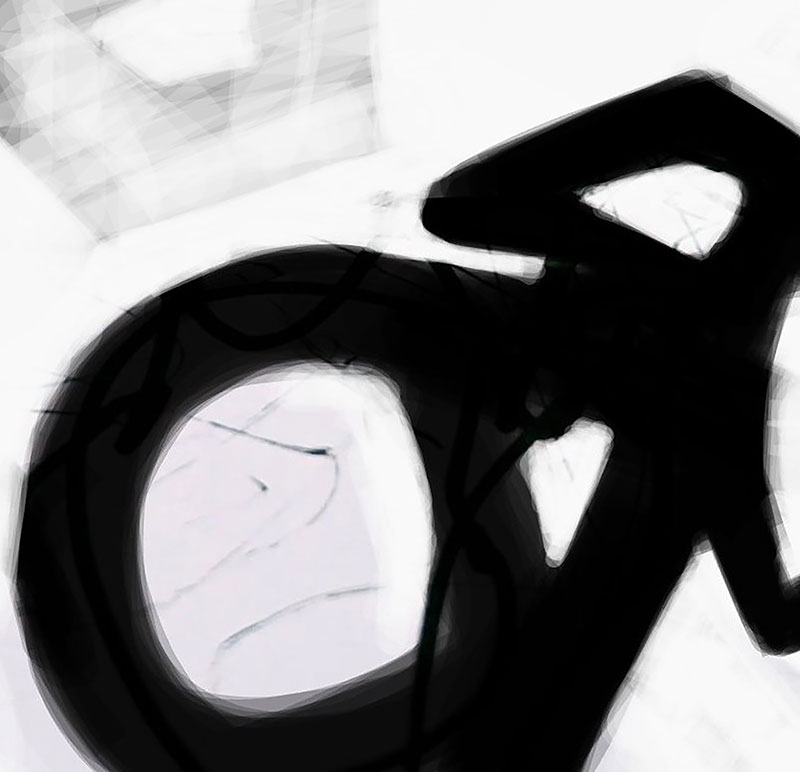
These paintings focus on the smallest intersections of movement the wind has made: brief events where the line changes direction, hesitates, or collides with another trace. When enlarged, these overlooked moments become vivid channels of presence. Each one marks an instant in which the wind carved a path through still air.
Part of the Conversation
Laying the groundwork for future investigations
Working with a single Anemograph has revealed a rich vocabulary of movement — shifts, hesitations, accelerations and turbulence recorded at one fixed point. The paintings that have grown from these recordings are only just beginning to explore these moments, enlarging the subtle events captured by the machine.
But these works also highlight a limitation: a single viewpoint can only show part of the conversation. When the Anemograph is placed in a valley, on a slope or on a ridge, the drawings change completely — shaped by how the land directs, accelerates or disrupts the air. These variations suggest relationships that a single instrument, recorded at different times, can’t fully reveal.
To understand how these movements relate — how one event leads to another, or how the landscape influences the flow — I now need to record these events simultaneously. This opens new and exciting possibilities for my painting practice: works created from paired windward and leeward recordings, or from triangulated measurements around features such as tree clusters or geological formations. These comparisons will allow a deeper reading of how the wind behaves across space.
Triangulation becomes the next step, offering a fuller picture of the wind’s movement and giving future paintings a richer and more grounded source of insight.
Triangulating the wind
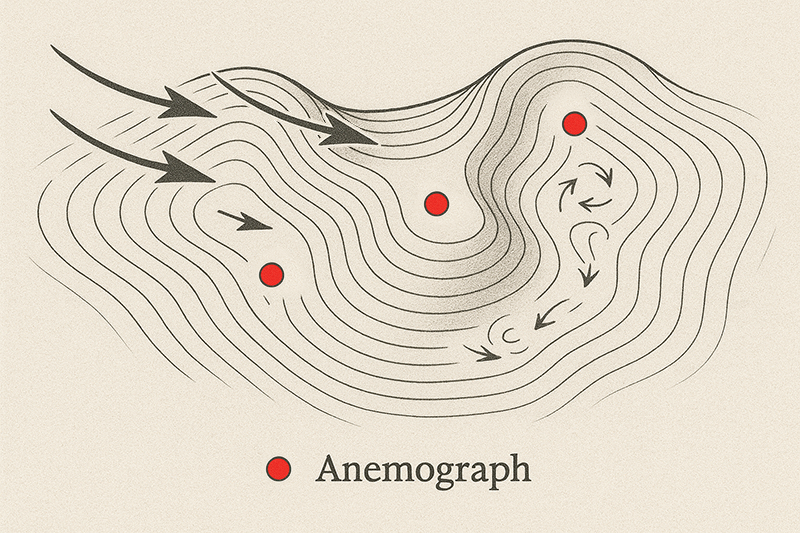
Working with a single Anemograph provides a rich source of wind data, but it also feels like I’m only hearing one side of a much larger conversation. One instrument records from only one point in the landscape at any moment. Early experiments — moving the Anemograph between the valley floor, slope and ridge line — quickly revealed how strongly the terrain shapes the wind’s character. But because each drawing was made at a different time, true comparisons were impossible; the changes I observed could never be fully linked to cause and effect.
This is where a synchronised trio of Anemographs becomes essential. By building two additional instruments, I aim to place three machines in different positions across an alternating landscape at the same moment. Together they will allow me to triangulate the airflow: to record how wind behaves as it moves through varying topographies, and to capture more of the conversation unfolding across the land.
My hope is that these simultaneous recordings will offer a deeper understanding of how landscape shapes wind — and provide an even richer grounding for my artwork.